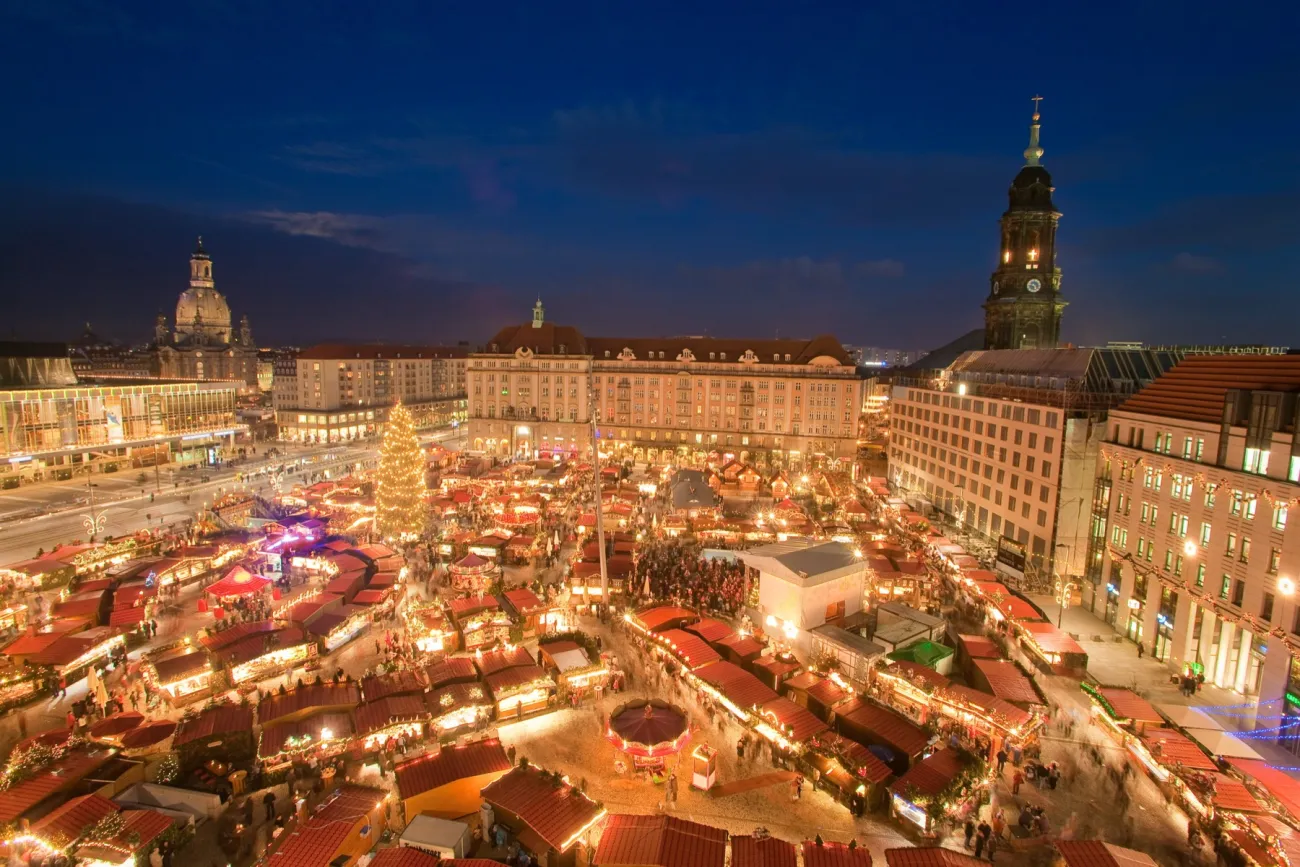
If you can travel between 27 November and 23 December 2026, every market in this guide will be open: Nuremberg, Dresden, Cologne, Munich, Rothenburg ob der Tauber and Berlin. Most close at Christmas. Only Berlin’s Gendarmenmarkt carries on to 31 December. Don’t count on snow. Over the last ten Decembers, even snowy Munich saw any snowfall on just 29% of days before Christmas. Cologne is the mildest of the six and the wettest. A mug of Glühwein costs about €5 in Dresden and Cologne this year, plus a €5 deposit in Dresden.
Germany has thousands of Christmas markets. Most visitors pick from the same handful, and the choice usually comes down to dates, travel time and how cold the evenings feel. For this guide we checked every 2026 date and opening time with the organisers or the city, and took Glühwein prices from this year’s local reporting. We also analysed ten years of daily December weather for each city, from 2016 to 2025.
Vienna, Prague, Budapest and other cities outside Germany are covered in our European Christmas markets guide. If you are choosing between Vienna and Prague, see Vienna vs Prague.
2026 dates and opening hours
The table lists the main market in each city. Larger cities run several more markets with their own dates, so check the name before you book anything around a particular day.
| Market | 2026 dates | Usual hours | Last day | Entry |
|---|---|---|---|---|
| Nuremberg: Christkindlesmarkt, Hauptmarkt | 27 November to 24 December | 10:00 to 21:00 daily | 24 December, until 14:00 | Free |
| Dresden: Striezelmarkt, Altmarkt | 25 November to 24 December | 10:00 to 21:00 daily (opening day from 16:00) | 24 December, until 14:00 | Free |
| Cologne: Christmas market at the Cathedral, Roncalliplatz | 16 November to 23 December (closed 22 November) | Sun to Wed 11:00 to 21:00; Thu and Fri 11:00 to 22:00; Sat 10:00 to 22:00 | 23 December | Free |
| Munich: Christkindlmarkt, Marienplatz | 20 November to 24 December (closed 22 November) | Mon to Sat 10:00 to 21:00; Sun 10:00 to 20:00 | 24 December, until 14:00 | Free |
| Rothenburg ob der Tauber: Reiterlesmarkt | 20 November to 23 December (closed 22 November) | Sun to Thu 11:00 to 19:00; Fri and Sat 11:00 to 20:00 | 23 December | Free |
| Berlin: WeihnachtsZauber, Gendarmenmarkt | 23 November to 31 December | Sun to Thu 11:00 to 22:00; Fri and Sat 11:00 to 23:00 | 31 December (24 December until 18:00) | €2; free Mon to Fri 11:00 to 14:00, except 24 to 26 and 31 December |
Three dates catch people out. Sunday 22 November is Totensonntag, a day of remembrance, and the Cologne, Munich and Rothenburg markets stay shut. Nuremberg holds its formal opening with the Prologue at 17:30 on Friday 27 November, so expect a crowd on the Hauptmarkt that evening. And on Christmas Eve the markets that are still open close early, at 14:00 in Nuremberg, Dresden and Munich. If you want a market on 25 or 26 December, Berlin is the only one of the six.
How much time you get after dark
Christmas markets look their best once the lights come on, and in December that happens early. On 15 December the sun sets between 15:52 in Berlin and 16:26 in Cologne. What really varies is closing time. The figures below count the time from sunset to closing on a normal weekday in mid-December.
| Market | Sunset on 15 December | Weekday closing | Time after dark |
|---|---|---|---|
| Berlin | 15:52 | 22:00 | About 6 hours |
| Dresden | 15:58 | 21:00 | About 5 hours |
| Nuremberg | 16:16 | 21:00 | About 4¾ hours |
| Munich | 16:20 | 21:00 (Sunday 20:00) | About 4½ hours |
| Cologne | 16:26 | 21:00 (Thursday and Friday 22:00) | About 4½ hours |
| Rothenburg | 16:20 | 19:00 (Friday and Saturday 20:00) | About 2¾ hours |
Rothenburg is the one to plan around. Its market closes at 19:00 on most nights, which leaves less than three hours of darkness. On a day trip that window is easy to miss. A Friday or Saturday gives you an extra hour, and a night in the town gives you the most time.
December weather: cold and damp, seldom snowy
Postcards show German Christmas markets under fresh snow. Over the last ten years, December was mostly grey, around freezing at night and a few degrees above it by day. We looked at every day from 1 to 24 December between 2016 and 2025, 240 days per city.
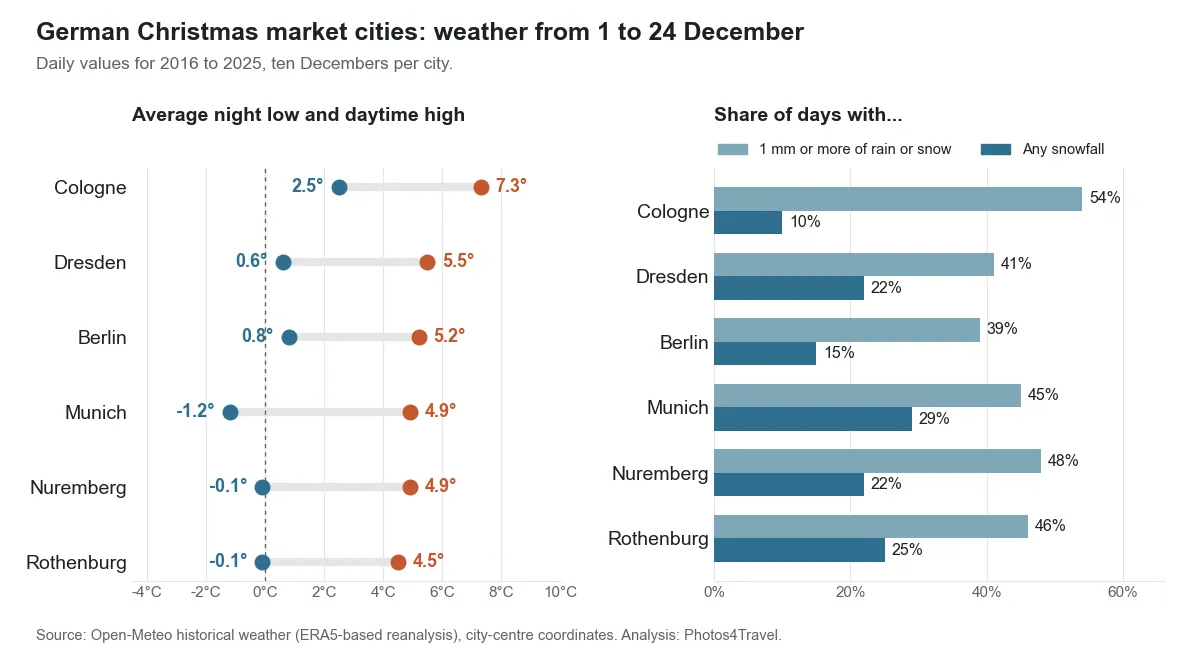
The table adds the numbers that matter for an evening outdoors: how often nights drop below freezing and how often there is enough snow to settle.
| City | Average high / low | Nights below 0°C | Days with 1 mm or more of rain or snow | Days with any snowfall | Days with 1 cm of new snow or more | Years with at least one such day |
|---|---|---|---|---|---|---|
| Cologne | 7.3°C / 2.5°C (45°F / 36°F) | 24% | 54% | 10% | 3% | 3 of 10 |
| Dresden | 5.5°C / 0.6°C (42°F / 33°F) | 41% | 41% | 22% | 7% | 4 of 10 |
| Berlin | 5.2°C / 0.8°C (41°F / 33°F) | 40% | 39% | 15% | 5% | 5 of 10 |
| Nuremberg | 4.9°C / −0.1°C (41°F / 32°F) | 51% | 48% | 22% | 10% | 8 of 10 |
| Munich | 4.9°C / −1.2°C (41°F / 30°F) | 65% | 45% | 29% | 14% | 9 of 10 |
| Rothenburg | 4.5°C / −0.1°C (40°F / 32°F) | 52% | 46% | 25% | 12% | 8 of 10 |
The three Bavarian stops, Munich, Nuremberg and Rothenburg, are the best bet for snow. In nine of the last ten years Munich had at least one day before Christmas with a centimetre or more of fresh snow. Cologne had one in only three years, and there the bigger nuisance is rain: more than half of all days brought at least 1 mm. Berlin and Dresden were the driest, but Berlin also has the shortest days. The sun is up for about 7 hours 40 minutes in mid-December.
For packing, plan on standing still in temperatures close to freezing for two or three hours. That calls for warm boots, a hat and gloves rather than a heavy coat alone. In Cologne, add an umbrella or a hood. Our Germany weather guide covers the rest of the year.
Glühwein prices in 2026
Each stall sets its own price, and most markets do not publish one. These are the figures that local reporting or the organisers confirmed by 16 November 2026. Prices are for a standard mug of red Glühwein, usually 0.2 litres.
| Market | Glühwein, 2026 | Mug deposit | Status |
|---|---|---|---|
| Dresden, Striezelmarkt | Mostly €5; some stalls €4.50 | €5 | Confirmed for 2026 (diesachsen.de) |
| Cologne, Cathedral market | €5 (organic Glühwein); children’s punch €4 | Not published | Confirmed for 2026 by the organiser (t-online) |
| Munich, Marienplatz | €5 to €7.50 in 2025, by stall | Not published | 2026 prices not yet reported |
| Nuremberg, Rothenburg, Berlin | Not yet reported | Not published | Check at the stall |
The deposit is charged on top of the drink. Hand the mug back at a stall for the money, or keep it as a souvenir. The mugs change design each year. Cologne’s 2026 mugs come in red and white, the city’s colours.
Dresden is the one market where prices can be traced back far. In the city’s own press releases for 2006 and 2007, a mug cost €1.80 to €2. By 2011 and 2012 it was €2.50, by 2019 €3.50 to €4. After the market came back in 2022, following two cancelled years, the cheapest Glühwein started at €4. It has held at €4.50 to €5 since 2024. The price has more than doubled in twenty years, and the deposit has gone from €3 in 2015 to €5.
Prices well above that do exist. Munich’s t-online reported a Champagne Glühwein for €18 at a hotel stall near the main station this year, and €8 for the ordinary red and white there. Both are outside the Marienplatz market.
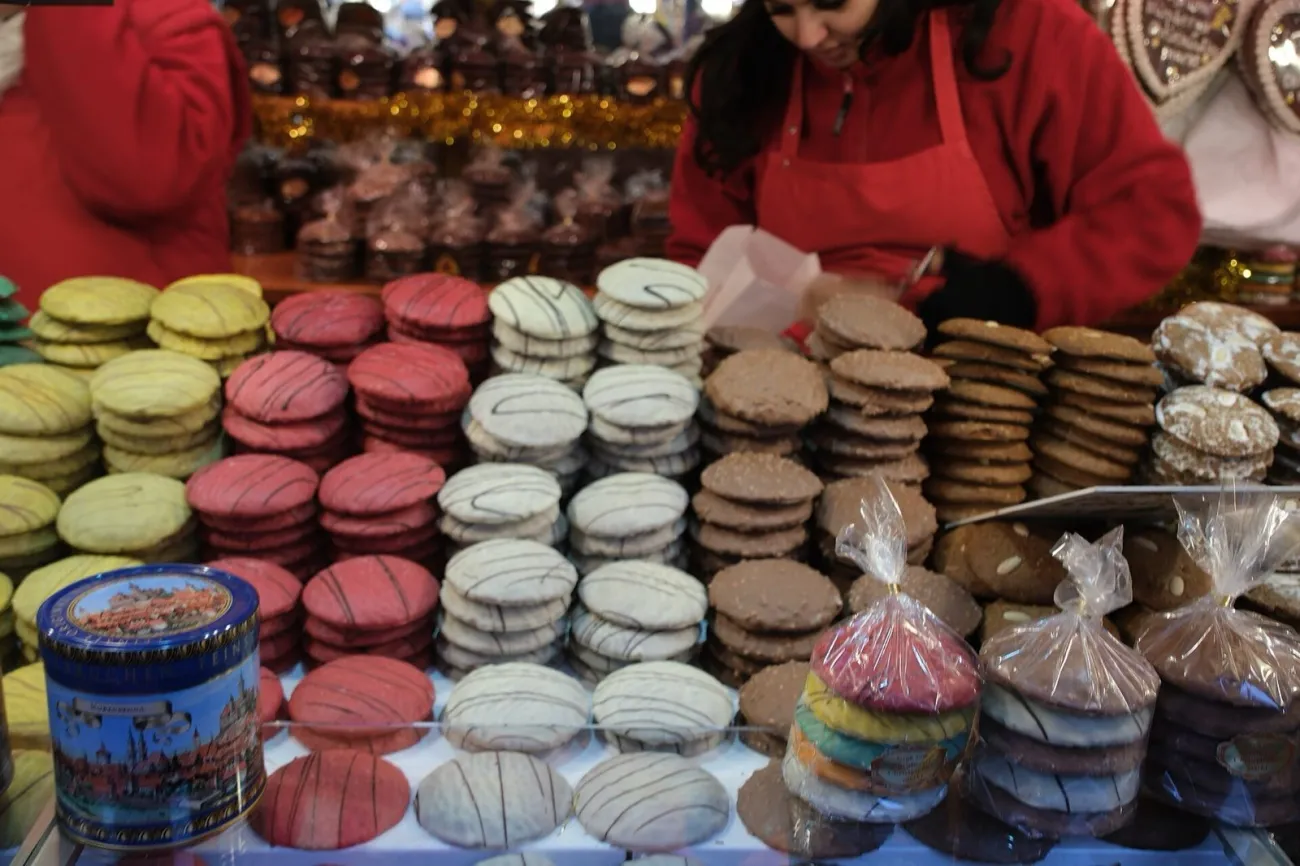
Food has not gone up much either. In Dresden a 120 g Bratwurst costs €4.50 to €5 this year. Many stalls take cards, but not all, so carry some cash. Nuremberg also sells its own Christkindlesmarkt-Taler, a €5 token that is accepted at every stall on the Hauptmarkt.
The six markets, one by one
Nuremberg: the classic, on one square
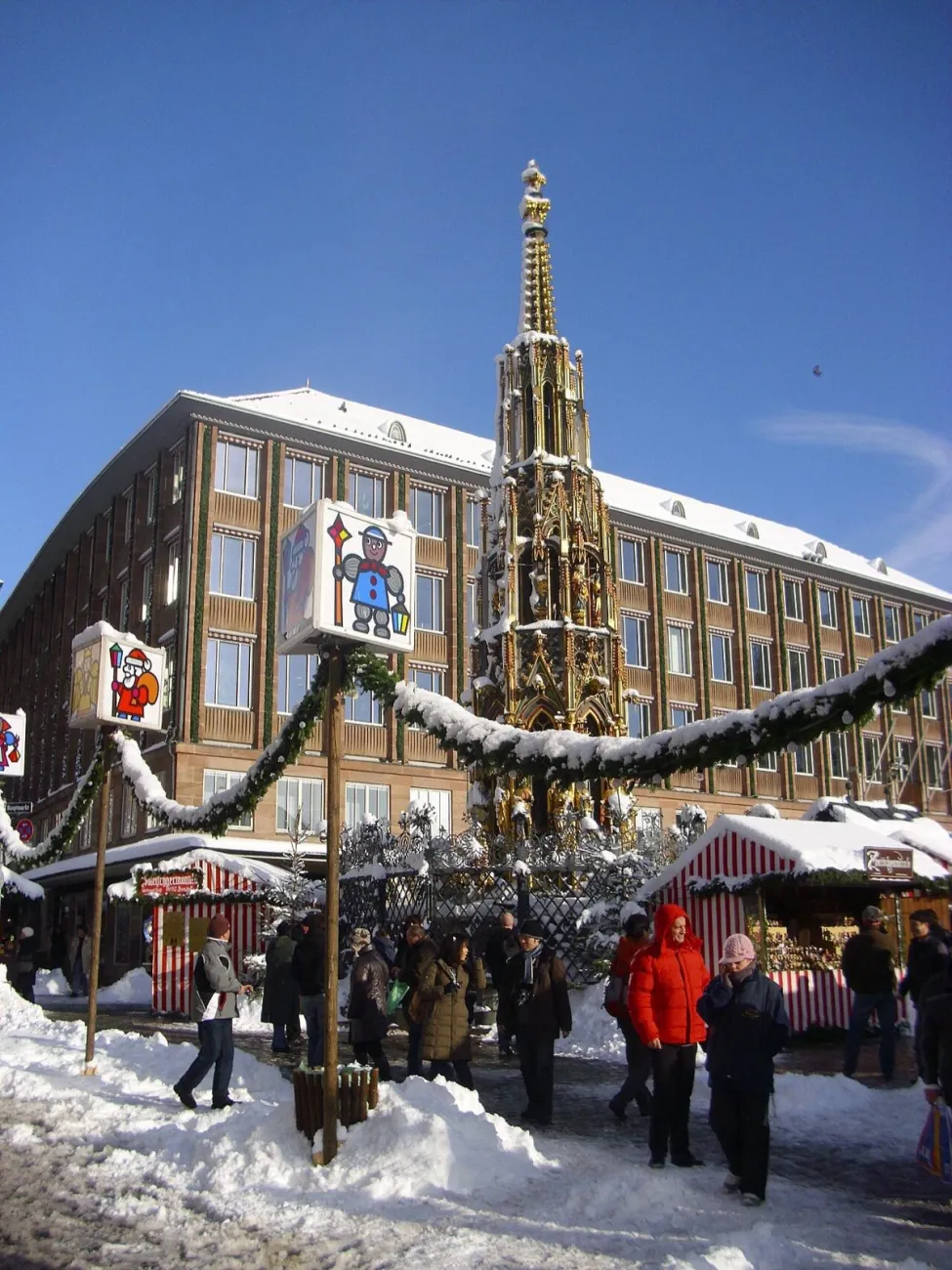
The Christkindlesmarkt fills the Hauptmarkt in the old town, below the Frauenkirche. The organisers sell it as a “little town of wood and cloth”: wooden stalls under red-and-white cloth, with a focus on traditional goods. Look for Lebkuchen and the little figures made from dried prunes, the Zwetschgenmännchen. Beside the main square there is a children’s market and a Market of the Partner Cities, where stalls from Nuremberg’s twin towns sell their own specialities.
It opens later than most, on 27 November. For the Prologue at 17:30 that evening, be on the square early. If you want room to look at the stalls, go on a weekday morning rather than a Saturday evening. For a guided start, the two-hour Christmas City culinary tour runs in English and German and includes tastings.
Dresden: Germany’s oldest, and the biggest crowds
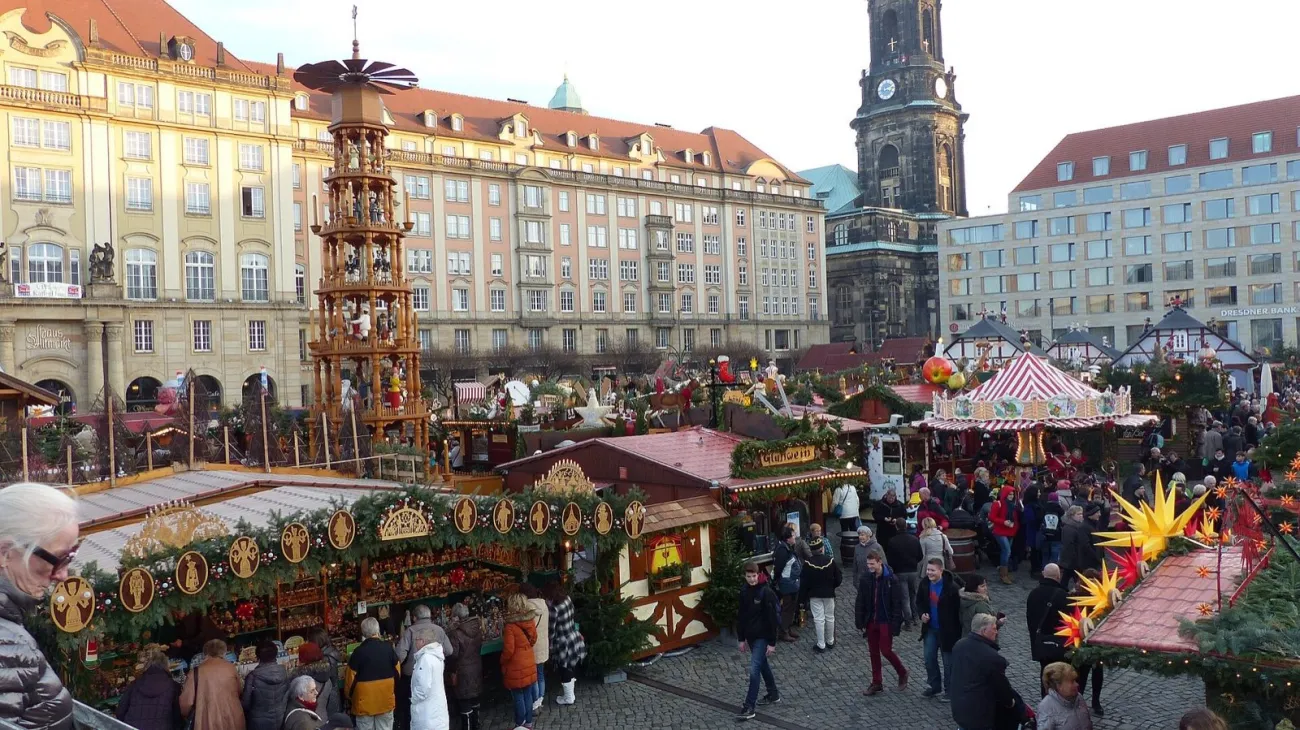
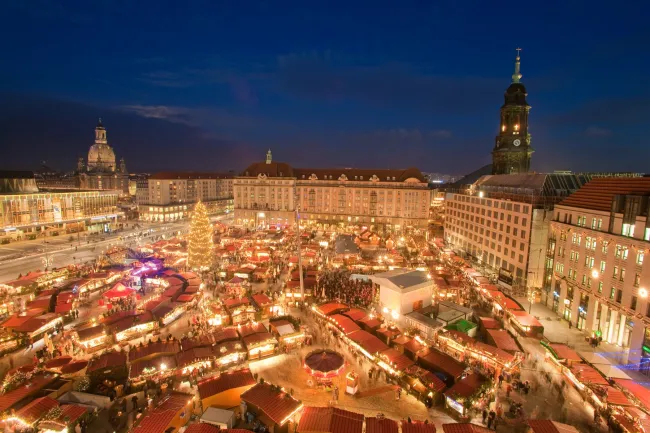
2026 is the 592nd Striezelmarkt, and Dresden calls it Germany’s oldest Christmas market. The city expects more than two million visitors between 25 November and 24 December. It sits on the Altmarkt, a short walk from the Frauenkirche, and its landmarks are a walk-in candle arch at the entrance and a tall wooden Christmas pyramid. The name comes from Striezel, the old word for Dresden’s Christstollen.
Opening day starts with a service in the Kreuzkirche at 15:00. The mayor then opens the market, the first Stollen is cut and the pyramid starts turning. This year’s theme is the Pflaumentoffel, the market’s historic figure, made from dried prunes. The Pflaumentoffel tour combines a bus ride with three markets, but it runs in German only.
Cologne: the cathedral backdrop, and the longest season
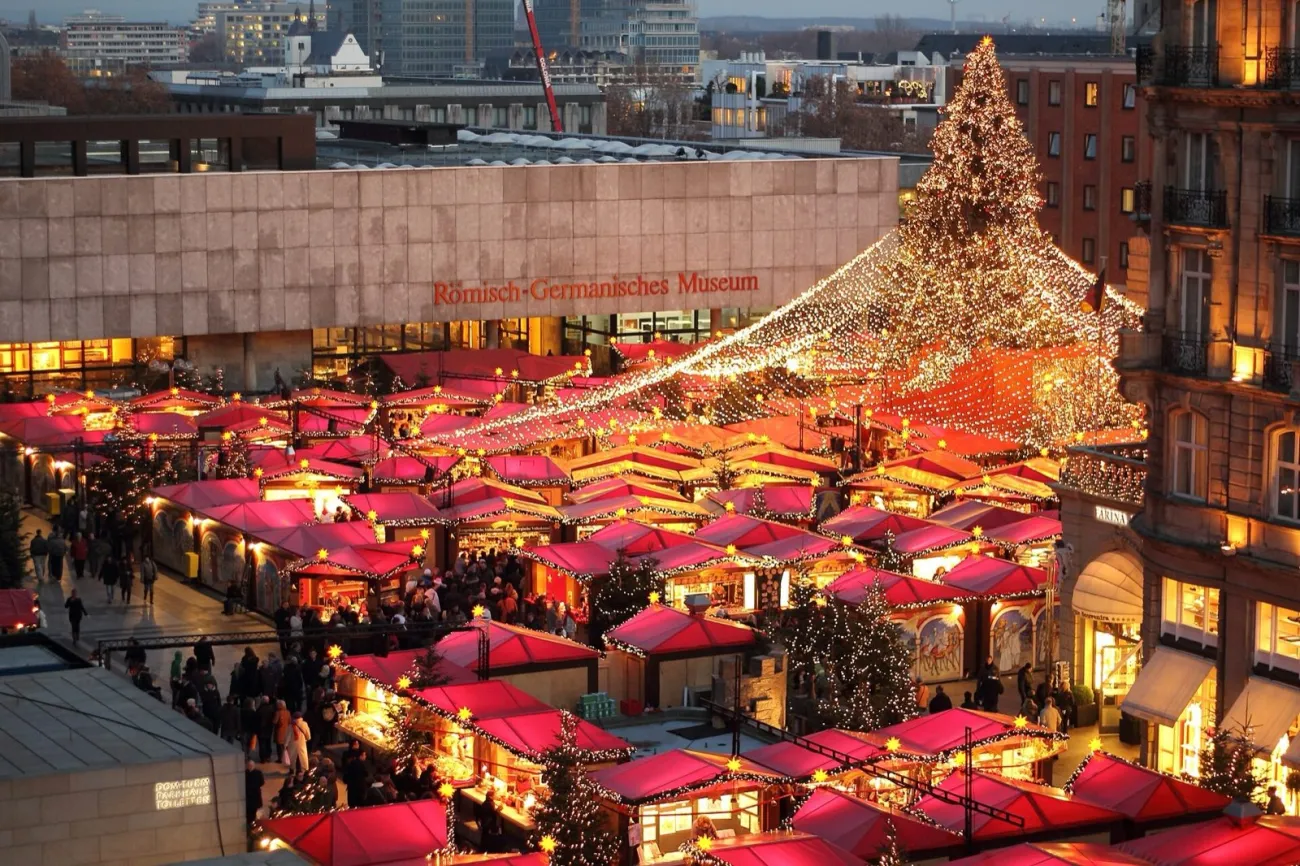
The “Markt der Herzen” on the Roncalliplatz is the one with the cathedral towering over it. It also opens earliest, on Monday 16 November, and stays open until 22:00 from Thursday to Saturday. Cologne has several other large markets, and the Neumarkt and Chocolate Museum markets also charge €5 for Glühwein this year. Because Cologne Hauptbahnhof is right beside the cathedral, this is the easiest market to reach straight off a train.
New for 2026, the organisers list a miniature Christmas market, a viewing terrace called the “Sternwarte” and a children’s carousel.
Munich: Marienplatz, and a Krampus run
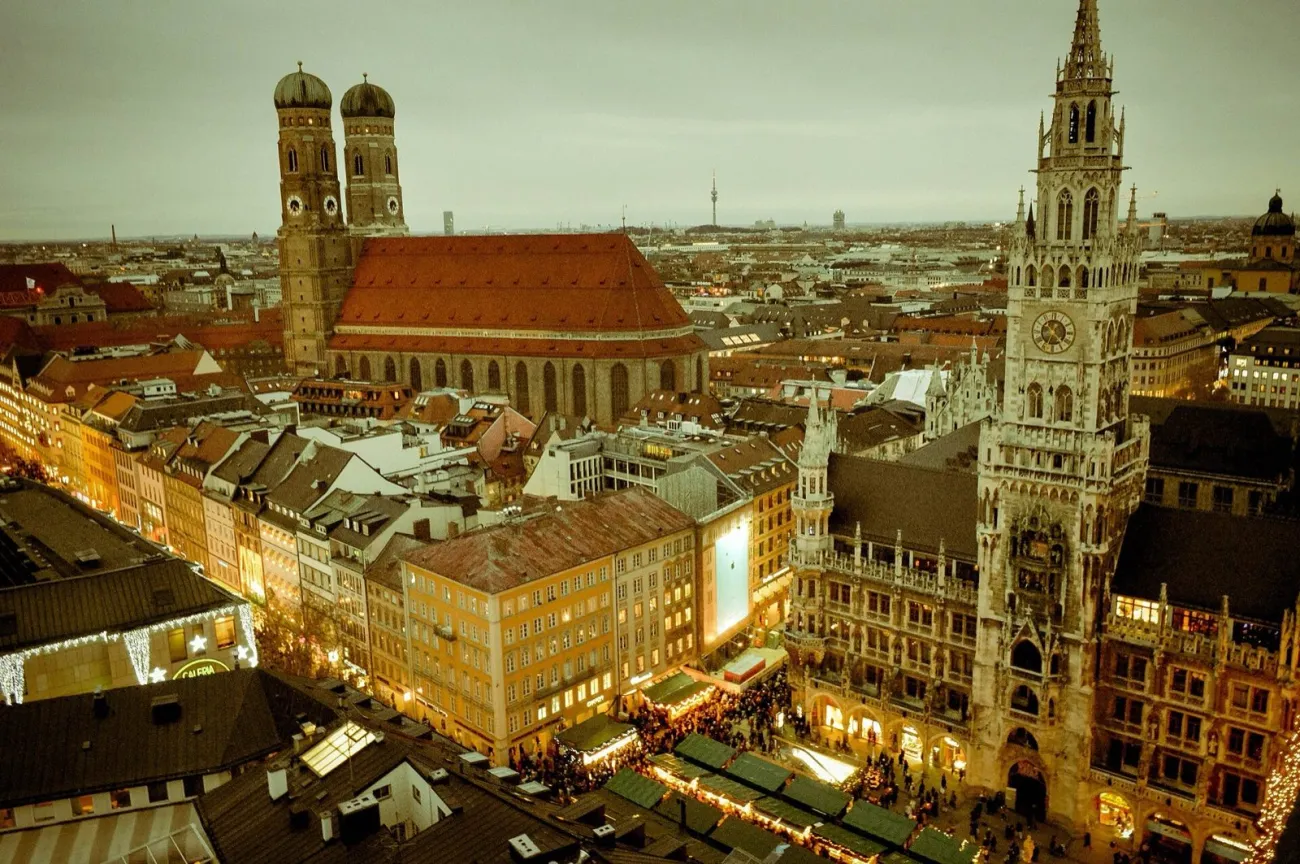
The Christkindlmarkt stretches from Marienplatz into the surrounding streets, below the neo-Gothic New Town Hall. The date to remember is Sunday 13 December. From 15:00 to 17:00, Krampus and Perchten figures parade through the old town, and the city says the run draws up to 50,000 people. If you would rather avoid that crowd, pick another day. Munich also had the coldest nights in our data: 65% of them dropped below freezing.
Rothenburg ob der Tauber: small, walled and early to close
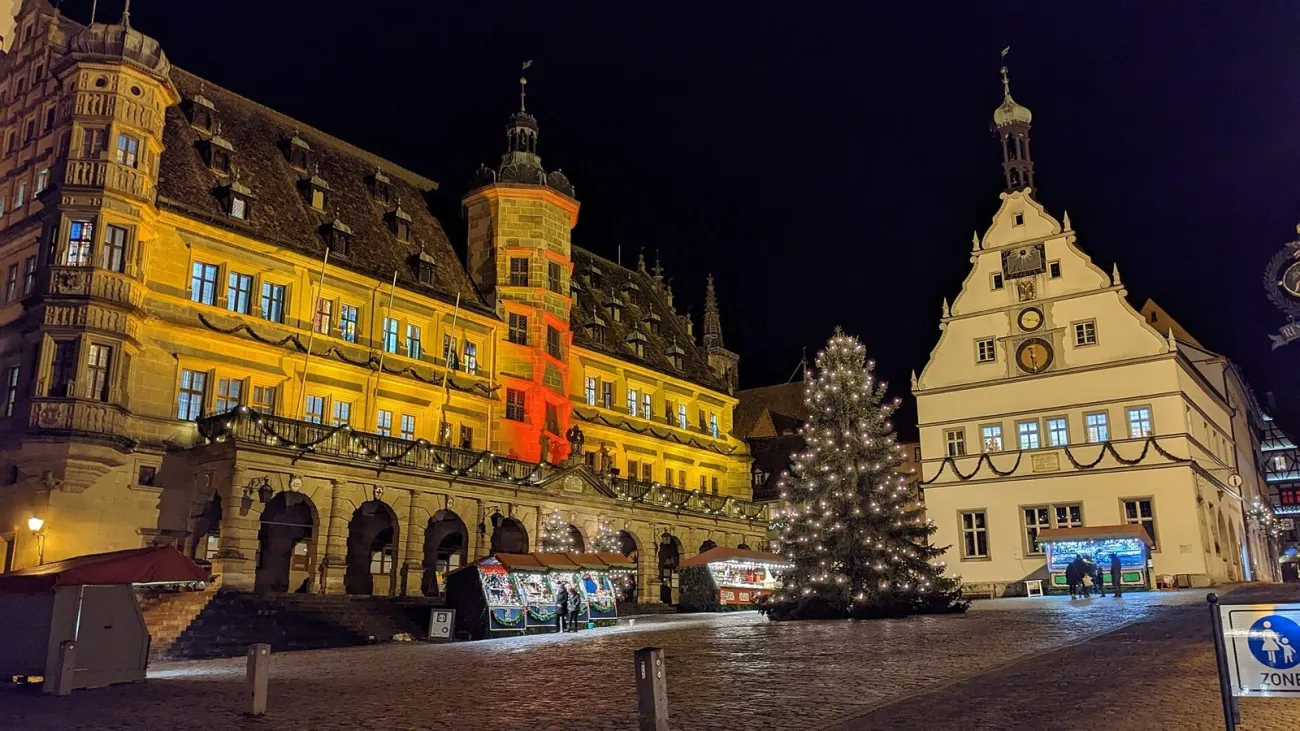
The Reiterlesmarkt spreads over the Marktplatz, the Grüner Markt, the Kirchplatz and the courtyard of the Town Hall. The four squares are only a few minutes’ walk apart. The market takes its name from the Reiterle, a figure on horseback who rides into the Marktplatz at 17:00 on Friday 27 November to greet visitors, after which the town lights its tree. That night the market stays open until 22:00. From 1 to 23 December a new Advent window is lit at the Town Hall every day at 17:00.
The short evenings are the catch, as the table above shows. Spend a night inside the walls if you can. It also means you are still there after the day-trippers have gone home.
Berlin: Gendarmenmarkt, open past Christmas
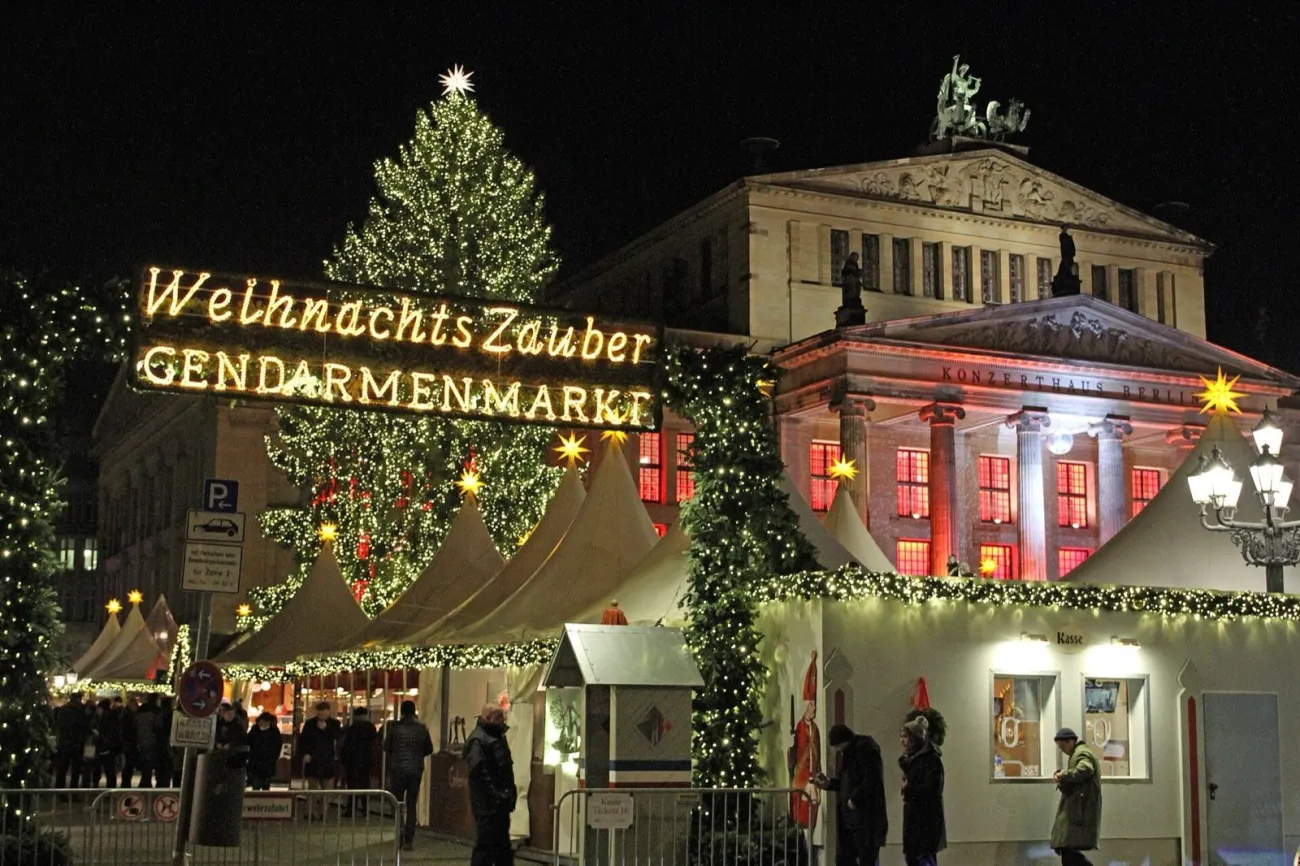
WeihnachtsZauber is the one market in this guide with an entry fee: €2, or free on weekday lunchtimes between 11:00 and 14:00. Part of the entry money goes to cultural and social causes in Berlin, according to the city’s listing. It is set between the Konzerthaus and the French and German churches, and the stalls focus on crafts. There is also a heated, covered area for food. Berlin’s official site puts visitor numbers at around 800,000 a year. It runs until 31 December, so it suits a trip between Christmas and New Year. For the rest of the city, see Berlin history and culture.
Combining cities by train
Germany’s rail network makes two or three markets in one trip easy. The table shows the fastest direct morning train in Deutsche Bahn’s timetable for Tuesday 8 December 2026. Times can change before you travel, so check the journey on the day you plan.
| Route | Fastest direct train | Train |
|---|---|---|
| Frankfurt (Main) Hbf to Cologne Hbf | 1 h 9 min | ICE |
| Frankfurt (Main) Hbf to Nuremberg Hbf | 2 h 40 min | ICE |
| Nuremberg Hbf to Munich Hbf | 1 h 43 min | ICE |
| Berlin Hbf to Dresden Hbf | 1 h 39 min | Railjet |
| Nuremberg Hbf to Rothenburg ob der Tauber | No direct train | Regional trains with a change at Steinach, and often at Ansbach as well |
The pairings that work best are Munich and Nuremberg with a day or night in Rothenburg, Berlin and Dresden, or Cologne on its own from Frankfurt. Cologne to Dresden is a long ride, so treat east and west as separate trips. There is more on rail travel in our Germany getting-around guide.
Which market should you choose?
All six are worth the trip. This is how they compare on the things that tend to decide it.
| If you want… | Go to | Why |
|---|---|---|
| The best-known traditional market | Nuremberg | One compact square, traditional goods and the Prologue on 27 November |
| The most history | Dresden | The 592nd edition, Stollen and the pyramid; the most time after dark of the free markets |
| The earliest start or a quick stop by train | Cologne | Opens 16 November, right beside the main station; the mildest weather |
| The best chance of snow | Munich or Rothenburg | Snow at least once before Christmas in 9 and 8 of the last 10 years |
| A small-town setting | Rothenburg | Medieval walls and a market spread over four small squares; stay the night |
| A trip after Christmas | Berlin | Gendarmenmarkt is open until 31 December |
For general planning around the holidays, see how to plan a Christmas holiday away from home and our holiday travel tips for busy airports and stations.
FAQ
When do German Christmas markets open in 2026?
Of the six in this guide, Cologne opens first, on 16 November. Munich and Rothenburg follow on 20 November, Berlin’s Gendarmenmarkt on 23 November, Dresden on 25 November and Nuremberg on 27 November.
Are German Christmas markets open on Christmas Day?
Most are not. Nuremberg, Dresden and Munich close at 14:00 on 24 December, and Cologne and Rothenburg end on 23 December. Berlin’s WeihnachtsZauber on Gendarmenmarkt stays open until 31 December.
Will there be snow at a German Christmas market?
Possibly, but don’t plan on it. From 1 to 24 December in 2016 to 2025, snow fell on 10% of days in Cologne and 29% in Munich. A centimetre or more of new snow fell on just 3% to 14% of days, depending on the city.
How much does Glühwein cost in 2026?
About €5 a mug in Dresden and at Cologne Cathedral, with some Dresden stalls at €4.50. Dresden charges a €5 mug deposit, which you get back when you return the mug. Munich’s Marienplatz stalls charged €5 to €7.50 in 2025.
Do you need cash at German Christmas markets?
It helps. Many stalls now take cards, but not all of them. In Nuremberg you can also pay with the official €5 Christkindlesmarkt-Taler.
Which German Christmas market is the oldest?
Dresden’s Striezelmarkt, which reaches its 592nd edition in 2026, is described by the city as Germany’s oldest.
Sources and checks
Last checked 16 November 2026. The weather figures, the time-after-dark estimates and the Dresden price comparison are our own analysis. Dates, hours and prices come from the sources below and can change.
- Dates and opening hours: Nuremberg Christkindlesmarkt (official site); Dresdner Striezelmarkt; Weihnachtsmarkt am Kölner Dom; Münchner Christkindlmarkt, run by the City of Munich; City of Rothenburg ob der Tauber; berlin.de for Gendarmenmarkt dates, hours, entry and visitor numbers.
- Prices: Dresden, diesachsen.de (10 November 2026); Dresden price history, compiled from city press releases and local media by dresdenausflug.de; Cologne, t-online Köln (5 November 2026); Munich, t-online München (10 November 2026).
- Weather: daily maximum and minimum temperature, precipitation, snowfall, sunset and day length from the Open-Meteo historical weather API for each city centre, 1 to 24 December, 2016 to 2025. These are modelled values based on the ERA5 reanalysis, not readings from a single station. “Snowfall” counts days with more than 0.1 cm of modelled new snow; it does not measure snow lying on the ground.
- Train times: Deutsche Bahn journey planner, searched on 16 November 2026 for Tuesday 8 December 2026, departures from 09:00 (Nuremberg to Munich from 08:00). The Rothenburg connection is described from the timetable, not timed.
- Links to GetYourGuide are affiliate links: if you book through them, we may earn a commission at no extra cost to you. They did not influence the analysis.