
User login
Bahamas Map
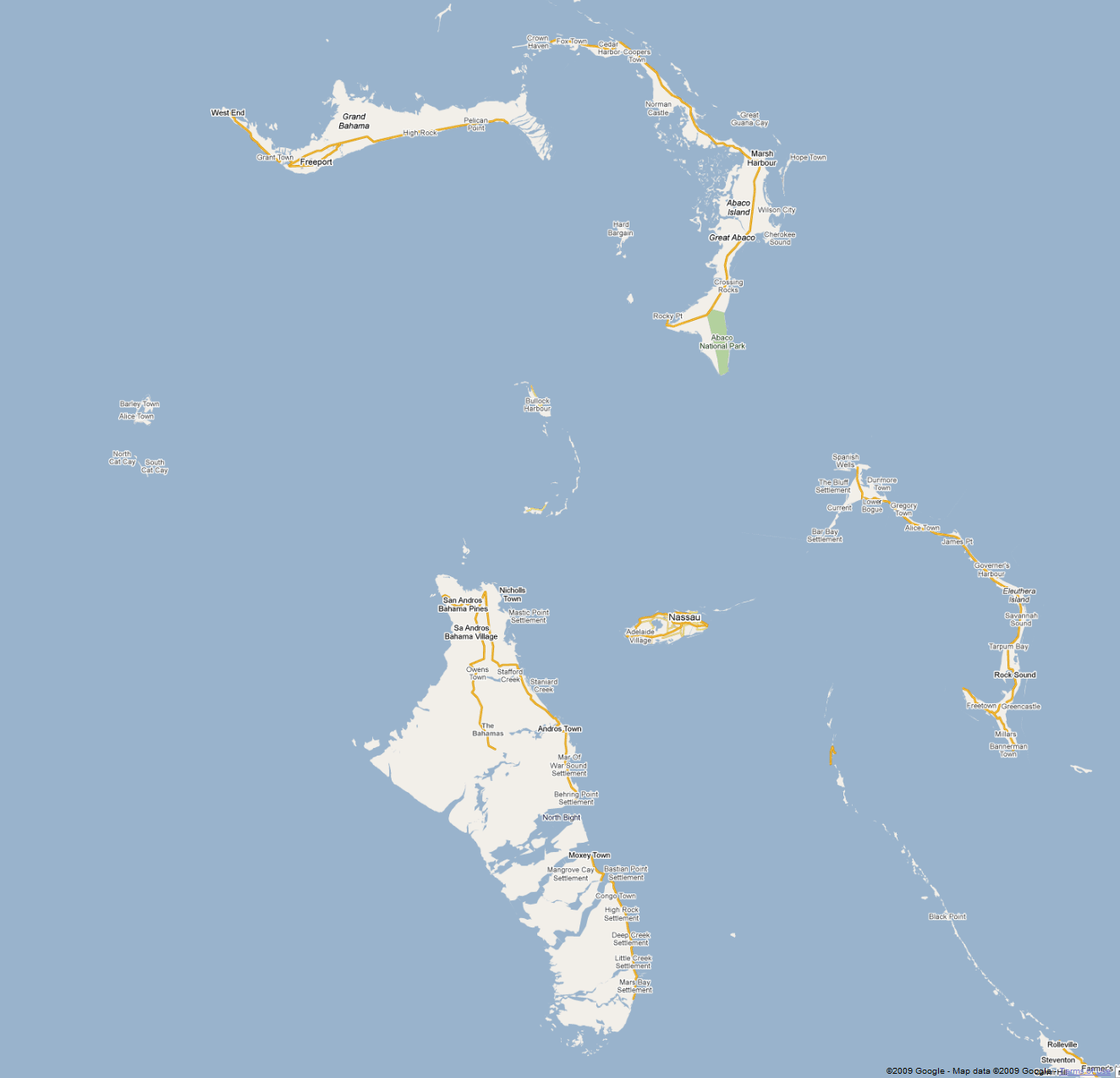
Map of the Bahamas – Islands, Districts & Geographic Overview
The Bahamas is an archipelago of more than 700 islands and cays scattered across the Atlantic Ocean, stretching over 500 miles from the coast of Florida to the northern Caribbean. Understanding the geography of the Bahamas helps travelers choose the right islands for their trip—whether they prefer resort hubs, remote beaches, diving areas, or quiet boutique islands. For a broader introduction to culture, lifestyle, regions, and history, see About the Bahamas.
This map-based guide highlights the country’s major island groups, key towns, airports, and natural features. It also explains how the islands relate to each other, making it especially useful when planning multi-island itineraries or pairing flights with ferries. For destination-specific inspiration, visit Top Destinations in the Bahamas and Bahamas Beaches.
Location of the Bahamas

The Bahamas lies southeast of Florida, northeast of Cuba and north of the Turks and Caicos Islands. Its location outside the Caribbean Sea but within the broader Caribbean region gives it a unique cultural and geographical identity. This position also makes it one of the most accessible tropical destinations from North America, with short flight connections and an extensive ferry network. For arrival guidance, see the Bahamas Airports Guide.
Understanding the Island Groups
Although the Bahamas includes hundreds of islands, only about 30 are inhabited. The archipelago is divided into distinct island groups, each offering a different travel experience:
- New Providence – Home to Nassau, the capital and the nation’s commercial center. This is the busiest and most developed island, ideal for first-time visitors and those who want nightlife, dining and resort amenities. Explore more in Top Destinations.
- Paradise Island – Connected to Nassau by bridges and known for its iconic resorts, casinos and beaches.
- The Exumas – A chain of 365 islands celebrated for turquoise shallows, sandbars, luxury villas and world-class boating.
- The Abacos – One of the best sailing regions in the Caribbean, dotted with colonial-inspired towns and calm waters.
- Eleuthera & Harbour Island – Famous for pink-sand beaches, boutique hotels and quiet coastal villages.
- Grand Bahama – A major tourism hub offering beaches, diving, national parks and a well-connected airport.
- Long Island, Cat Island, San Salvador & Others – Remote and scenic islands perfect for divers, nature enthusiasts and travelers seeking local culture and tranquility.
When planning your route, consider not just distance, but also available flights, ferry schedules and local transportation. The Bahamas Transportation Guide provides a detailed overview of airport links, inter-island ferries and domestic flight options.
How to Use the Map When Planning Your Trip
The Bahamas stretches far more than most travelers expect—north to south, the islands span a significant distance. As a result, certain routes require flights instead of ferries, and specific islands are better paired together within a single itinerary. Here are practical ways to use the map when organizing your travels:
- Identify clusters: Exuma Cays or Abaco Cays are perfect for island-hopping with short boat rides.
- Check entry airports: Nassau is the main hub, but direct flights also reach Exuma, Abaco and Grand Bahama.
- Match islands to travel styles: Remote islands for privacy, Nassau for nightlife, Exuma for boating, Eleuthera for beaches.
- Visualize distances: What seems close on a basic map may require separate flights.
Travel Tip
When visiting more than one island, try to plan a logical route—north to south or vice versa—rather than jumping back and forth through Nassau. It saves time and reduces overall travel stress, especially during the busy winter season.
Key Natural and Geographic Features
The Bahamas is defined by shallow banks, coral reefs, sandbars and deep-water channels. These characteristics create the iconic turquoise colors seen around Exuma and Eleuthera. They also influence weather, sailing conditions and wildlife.
- Bahama Banks – Large shallow carbonate platforms responsible for the luminous blue waters.
- Reef lines – Excellent for snorkeling and diving, especially around Andros and the Abacos.
- Ocean trenches – The Tongue of the Ocean, a deep-water trench between New Providence and Andros, is a world-class dive site.
Map Insights for Different Traveler Types
- Beach lovers: Focus on Eleuthera, Exuma and Cat Island—see Bahamas Beaches.
- Families: Nassau and Paradise Island offer attractions, aquariums, theme pools and easy transport.
- Adventurers: Long Island, San Salvador and the Abacos provide caves, blue holes, sailing routes and untouched nature.
- Cultural travelers: Nassau and the Out Islands offer festivals, Junkanoo celebrations and local crafts—see Festivals & Events.
Understanding the geography of the Bahamas helps you choose islands that fit your style, minimize long transfers and make the most of your time. Whether you prefer lively resort areas, pristine sandbars, blue holes, or quiet pink beaches, the map is the best place to begin designing your itinerary.