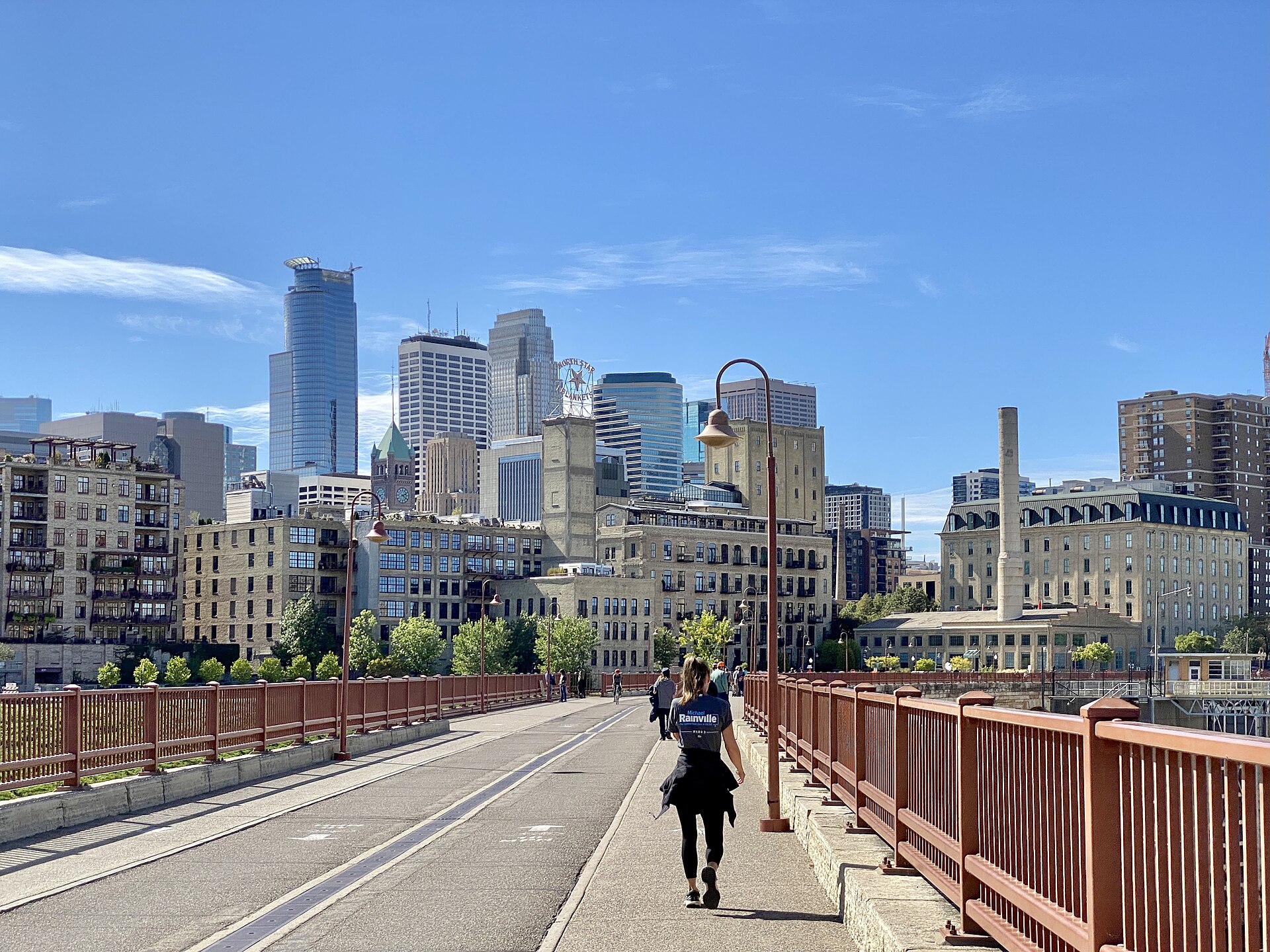
Minneapolis’s Mill District and skyline from Stone Arch Bridge, photographed on 25 September 2021. Photo: w_lemay · Minneapolis Skyline from Stone Arch Bridge, Mill District, Minneapolis, MN - 51781640540 · CC BY-SA 2.0 · Resized.
Minneapolis rewards visitors who split their time between the Mississippi riverfront, the museums and the lakes. Two or three days is enough for a first visit: one for the Mill District and Stone Arch Bridge, one for the Walker, the Sculpture Garden and Mia, and a lighter day for the Chain of Lakes or Minnehaha Falls.
This guide was researched on 5 November 2026 using official museum, park and visitor pages. Opening hours and prices change, so check them before you go.
Minneapolis at a glance
Swipe or scroll horizontally to see the full table.
| Sight | Why go | Adult price | Note |
|---|---|---|---|
| Stone Arch Bridge | River and skyline views by St Anthony Falls | Free | Reopened in July 2025 after repairs |
| Mill City Museum | The story of the flour-milling city | $15 | Tickets sold on-site only |
| Walker Art Center | Contemporary art | $18 | Closed Monday and Tuesday; under-19s free |
| Minneapolis Sculpture Garden | Spoonbridge and Cherry and 60+ works | Free | Open daily 6:00–midnight |
| Mia (Minneapolis Institute of Art) | Encyclopaedic art collection | Free | Closed Monday; special exhibitions ticketed |
| The Museum of Russian Art | Russian and Soviet-era art | $15 | Open daily; Sunday afternoons only |
| Chain of Lakes and Minnehaha Falls | Walking, cycling and swimming in summer | Free | Best from late spring to autumn |
The riverfront and Mill District
Minneapolis grew around St Anthony Falls, the only major waterfall on the Mississippi, which powered the flour mills that made the city rich. The best place to start is the Stone Arch Bridge, a former railway bridge now open to walkers and cyclists. It reopened on 21 July 2025 after more than a year of stone and mortar repairs, and its views of the falls and the skyline are the photo on this page.
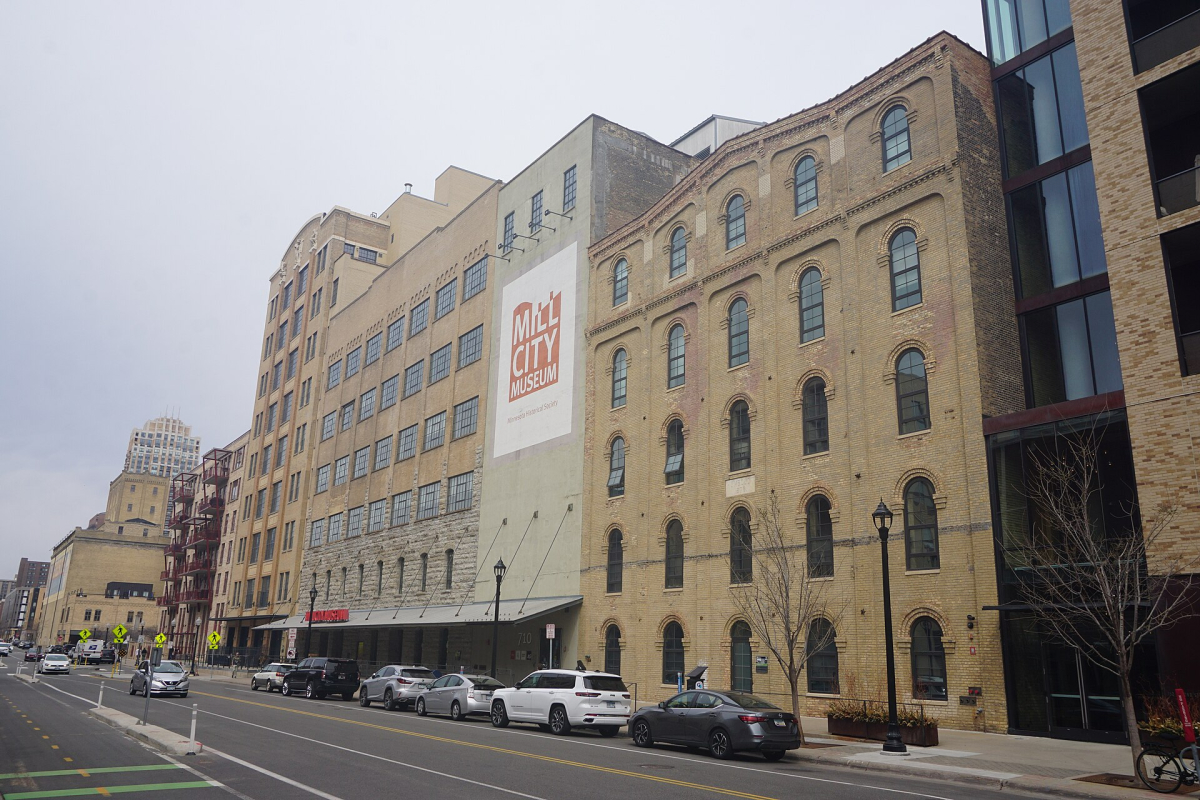
Across the street from the bridge, the Mill City Museum is built into the ruins of the Washburn A Mill, once the world's largest flour mill. Highlights include the Flour Tower elevator show, the Ruin Courtyard and a rooftop observation deck over the river. Admission is $15 for adults, $12 for seniors (65+), veterans and college students, and $8 for children aged 5–17. Tickets are sold on-site only, with no advance booking.
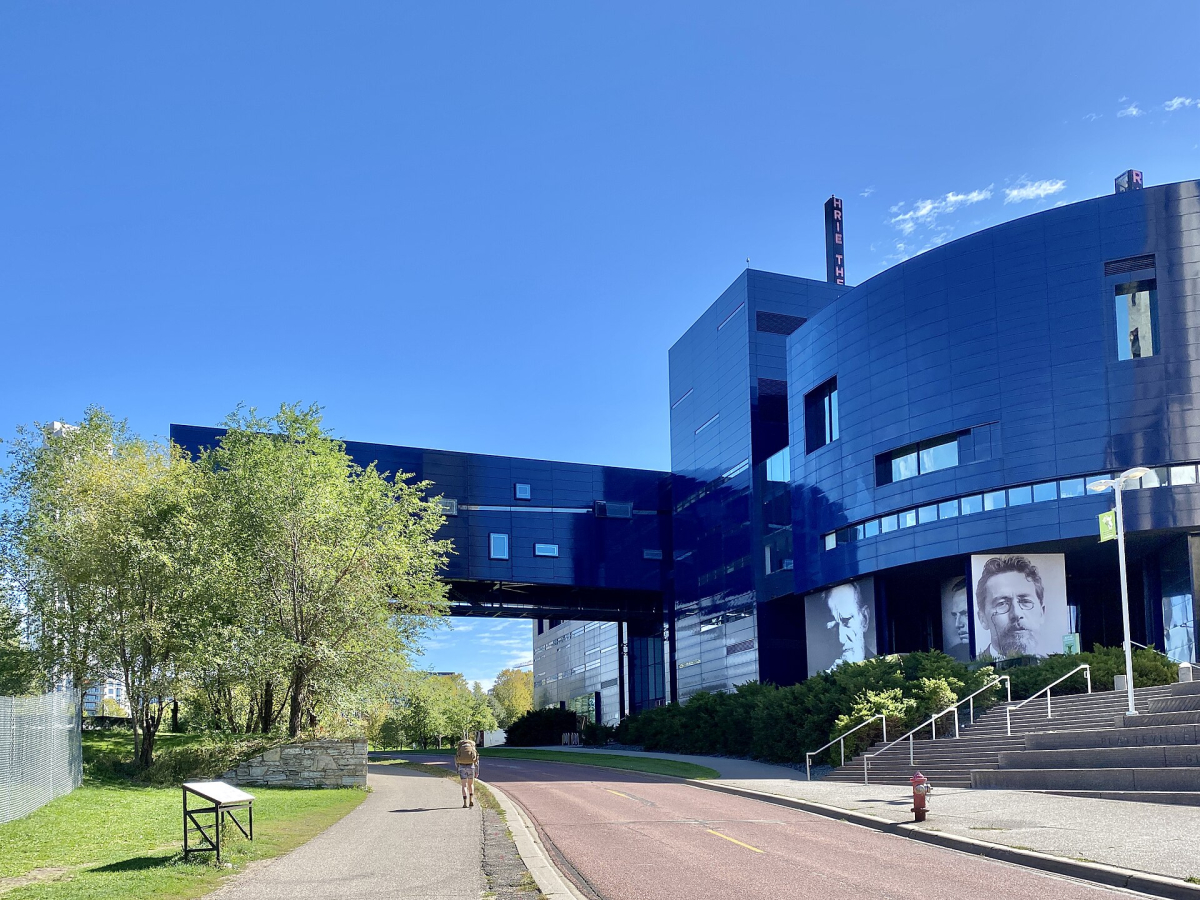
Next door, the Guthrie Theater, designed by Jean Nouvel, is worth seeing even without a show. Its Endless Bridge, a 178-foot cantilevered walkway, and the yellow-glass Amber Box on Level Nine frame the river and the falls. The public lobbies are usually open in the daytime, but hours change, so check the theatre's website. From 11 November to 27 December 2026, the Guthrie stages its annual A Christmas Carol.
Museums and the Sculpture Garden
The Walker Art Center is one of the leading contemporary art museums in the United States. It is open Wednesday to Sunday (until 21:00 on Thursdays), and closed on Monday and Tuesday. Adult admission is $18, seniors pay $16 and students $12; visitors aged 18 and under are free. The Walker also runs free Thursday nights and Free First Saturdays.
Outside, the Minneapolis Sculpture Garden is free and open every day from 6:00 to midnight. It covers 11 acres with more than 60 works, including Claes Oldenburg and Coosje van Bruggen's Spoonbridge and Cherry, the city's best-known landmark.
Mia, the Minneapolis Institute of Art, has free general admission every day it is open. It is closed on Mondays and stays open late on Thursdays; special exhibitions need a ticket. Further south, The Museum of Russian Art is open Monday to Saturday (10:00–17:00) and Sunday afternoons (13:00–17:00). Adults pay $15, seniors $13, students $5 and children under 14 are free. Until 7 February 2027 it shows Larisa Grigorieva: Painter of Porcelain.
Lakes, parks and Minnehaha Falls
The Chain of Lakes links Brownie Lake, Cedar Lake, Lake of the Isles, Bde Maka Ska and Lake Harriet, with about 15 miles of walking and cycling paths. Bde Maka Ska, the largest, has beaches, a boat dock and bike and boat rentals in season. It is a good half-day in summer and a scenic walk in autumn.
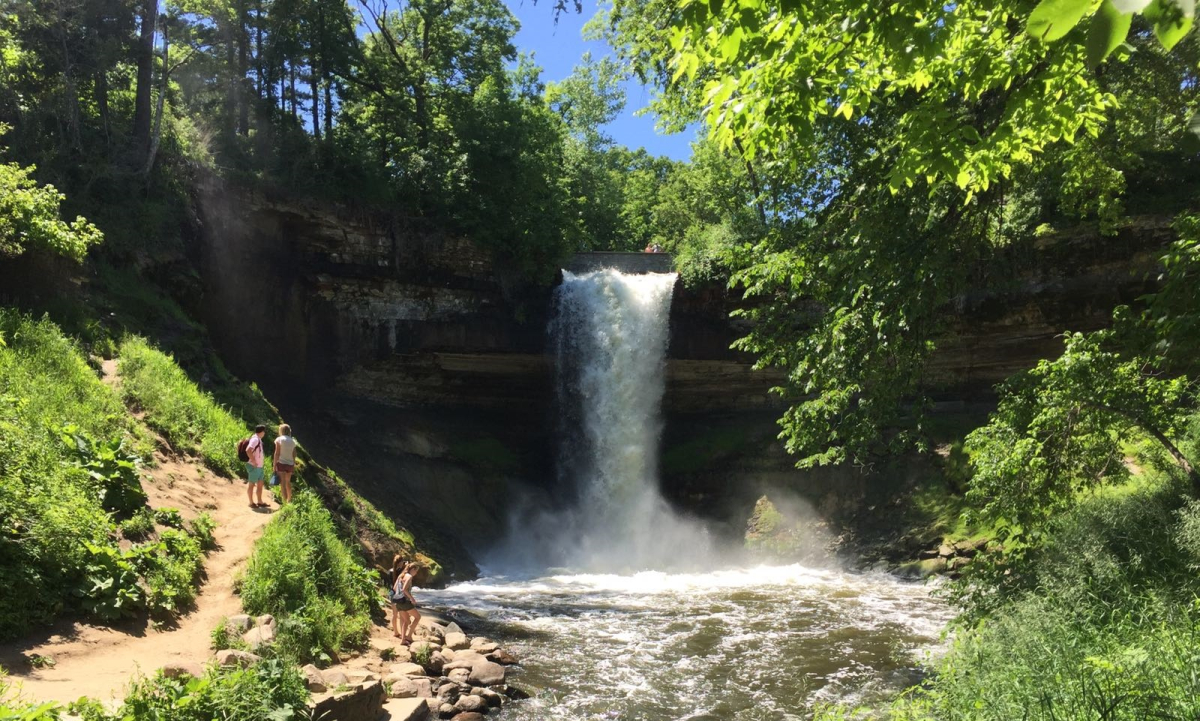
Minnehaha Regional Park, in the south of the city, is built around a waterfall in a limestone glen. The park covers 167 acres and is open from 6:00 to midnight in its developed areas. It is an easy stop on the way to or from the airport, as the METRO Blue Line has a station at 50th Street/Minnehaha Park.
Winter and the skyways
Minneapolis winters are long and cold, but the city is built for them. Downtown, the skyway system links buildings through enclosed second-floor bridges: according to Meet Minneapolis, it has over 10 miles of pathways connecting around 80 blocks. Most skyway-connected buildings are open until 18:00 on weekdays and closed at weekends, so plan weekend walks at street level.
Getting around
The METRO Blue Line light rail connects both airport terminals with downtown Minneapolis and the Mall of America. The Green Line runs from downtown through the University of Minnesota to downtown St Paul. Downtown, the riverfront is walkable, and the city's bike paths make cycling a good option in summer. Check fares and service changes on the Metro Transit website before you travel.
For hotels, the Mill District and downtown suit a riverfront and museum trip; the Uptown and lakes area is better for a summer stay. See our where to stay in the USA guide for wider planning.
A three-day plan
- Day 1, the riverfront: Stone Arch Bridge in the morning, Mill City Museum, then the Guthrie's Endless Bridge at sunset.
- Day 2, art: the Walker and the Sculpture Garden, then Mia in the afternoon (stay late on a Thursday).
- Day 3, outdoors: walk or cycle around Bde Maka Ska and Lake Harriet, then take the Blue Line to Minnehaha Falls on your way to the airport.
Minneapolis: FAQ
Is Minneapolis worth visiting?
Yes, especially if you like art, food and the outdoors. The museums are excellent, several are free, and the lakes and riverfront are easy to reach.
What are the best free things to do in Minneapolis?
The Stone Arch Bridge, the Minneapolis Sculpture Garden, Mia's collection, the Chain of Lakes and Minnehaha Falls are all free.
When is the best time to visit Minneapolis?
Late spring to early autumn is best for the lakes and riverfront. Winter is cold, but museums, theatres and the skyways keep a trip comfortable.
Do I need a car in Minneapolis?
Not for a first visit. The Blue and Green light rail lines, walking and cycling cover the main sights.
Sources and planning checks
Prices and opening hours were checked on 5 November 2026 against the Minnesota Historical Society, the Walker Art Center, The Museum of Russian Art, the Minneapolis Park and Recreation Board and Meet Minneapolis. Guthrie, Mia and Metro Transit details could not be confirmed on their own websites and should be checked before you travel. The itinerary is an editorial suggestion.
Affiliate note: Photos4Travel may earn a commission if you book through the hotel link in this article.
- Log in to post comments