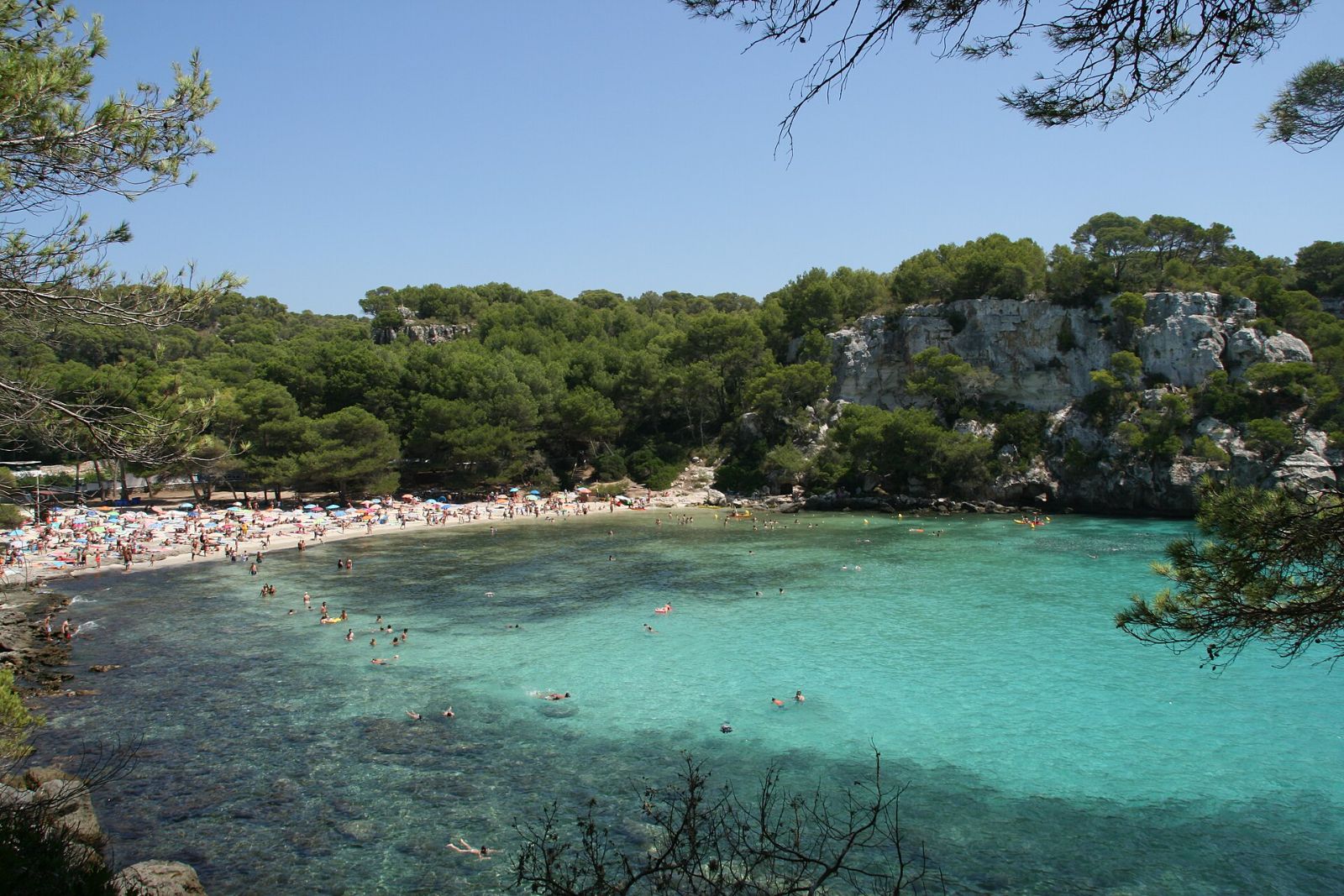
Cala Macarella, Menorca, Spain, 4 August 2014. Photo: Discasto · Image source · CC BY-SA 4.0. Resized.
Menorca is one of the calmest Balearic islands for a family holiday: shallow coves, a gentle pace, prehistoric monuments and a 185-kilometre coastal path. Base yourself near Ciutadella for the southern coves or near Maó for the harbour and the north-east, and use the seasonal beach buses to reach the most popular coves.
This guide was researched on 5 November 2026 using Menorca's official tourism, heritage and transport pages. Summer access rules and bus seasons change each year, so check them before you travel.
Menorca at a glance
Swipe or scroll horizontally to see the full table.
| Topic | What to know |
|---|---|
| Protected status | UNESCO Biosphere Reserve since 1993, extended to the sea in 2019 |
| World Heritage | Prehistoric Sites of Talayotic Menorca, inscribed in September 2023 |
| Coastal path | Camí de Cavalls: 185 km in 20 sections around the island |
| Best bases for families | Ciutadella area for southern coves; Maó area for the harbour and the north-east |
| Beach buses | Seasonal lines from Ciutadella and Maó to popular coves |
| Tourist tax | The Balearic sustainable tourism tax is charged per night by your accommodation; under-16s are exempt |
Beaches and coves
Menorca's south coast is lined with sheltered coves of white sand and pine trees, such as Cala Macarella (on the cover of this page), Cala en Turqueta and Cala Mitjana. They are beautiful but busy in July and August, with limited parking and a walk from the car parks. In 2026, the Consell de Menorca also ran a dedicated Ciutadella–Macarella bus (€4.60 one way, €8.40 return) in September, alongside its summer beach-bus network.
With young children, consider the wider, easier beaches as well: Son Bou in the south has the island's longest beach, and resorts such as Cala Galdana or Es Grau have shallow water and facilities nearby. Arrive early, bring shade and water, and take your rubbish home, as many of the virgin coves have no services.
Nature and the Camí de Cavalls
UNESCO declared Menorca a Biosphere Reserve in 1993, and in 2019 the reserve was extended to cover more than 500,000 hectares of sea. The best place to see the island's wildlife is S'Albufera des Grau Natural Park, more than 5,000 hectares of lagoon, dunes and wetland near Es Grau, home to wading birds and short, family-friendly trails.
The Camí de Cavalls is a historic 185-kilometre path around the whole coast, divided into 20 sections. You do not need to walk it all: pick a short section between two coves, such as Cala Galdana to Cala Macarella, for a half-day walk with swimming stops. Check the official site for any closed sections before you set off.
Talayotic Menorca
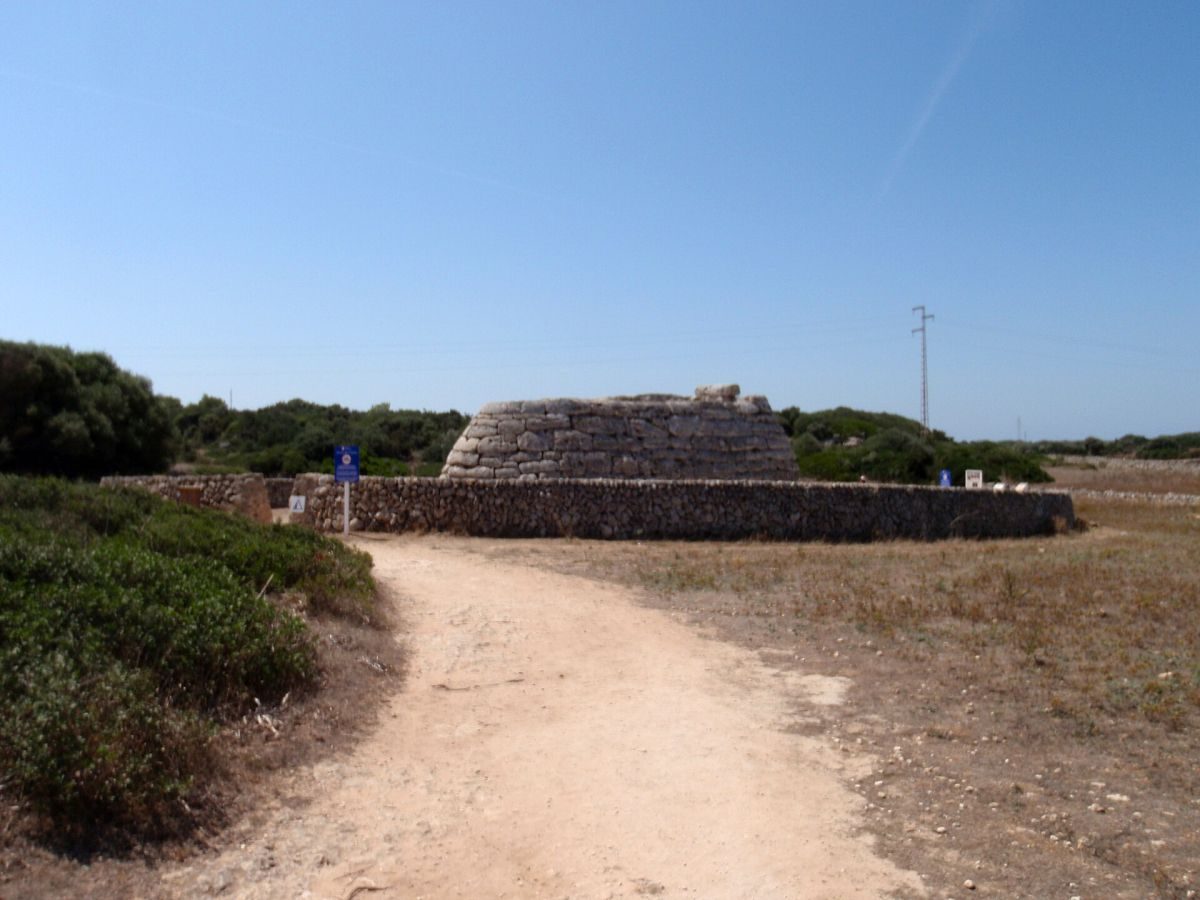
In September 2023, the Prehistoric Sites of Talayotic Menorca became Spain's 50th UNESCO World Heritage Site. The island is dotted with stone towers (talaiots), T-shaped sanctuaries (taules) and tombs. Two of the most rewarding sites with children are the Naveta des Tudons, a boat-shaped tomb just east of Ciutadella, and Torre d'en Galmés, a 4.5-hectare settlement in the south-centre of the island. Visit early or late in the day to avoid the heat.
For a different experience, the Cova de s'Aigua offers 45-minute guided visits in small groups: €10 for visitors over 15, €5 for ages 8–15 and free for under-eights. Book ahead.
Ciutadella and Maó
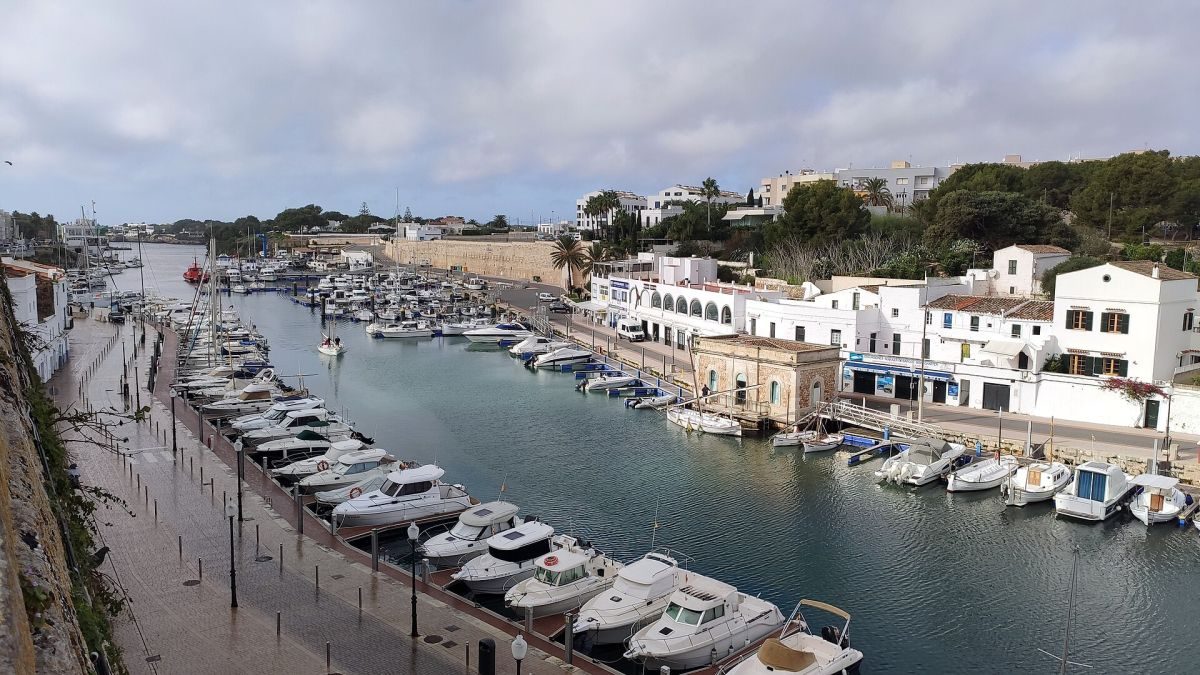
Ciutadella, in the west, is the former capital, with a cathedral, narrow old streets and a long, narrow harbour lined with restaurants, ideal for an evening stroll. Maó (Mahón), the capital in the east, sits on one of Europe's largest natural harbours, more than five kilometres long. Harbour boat trips leave from the waterfront in season, and the town's Georgian-style houses reflect the British rule of the 18th century. In the north, the fishing village of Fornells is known for its bay and seafood.
Getting around
A car gives the most freedom, but summer parking near the best coves is limited. The Consell's Mou-t Menorca network runs regular island buses and seasonal beach lines, such as Ciutadella to Cala en Turqueta and Macarella, and Maó to Es Grau and Cala en Porter. Check each year's timetables before you travel.
See our Spain travel guide for the other Balearic islands and mainland ideas.
Menorca for families: FAQ
Is Menorca good for families?
Yes. It is quieter than Mallorca or Ibiza, with many shallow coves, short walks and easy-going towns.
When is the best time to visit Menorca with children?
June and September have warm sea temperatures and fewer crowds than July and August.
Do I need a car in Menorca?
Not strictly, as buses link the towns and many beaches in summer, but a car makes it easier to explore quieter coves.
Do children pay the tourist tax?
No. The Balearic sustainable tourism tax does not apply to children under 16.
Sources and planning checks
Facts were checked on 5 November 2026 against Menorca's official tourism site, Menorca Talaiòtica, the Camí de Cavalls site, Mou-t Menorca and the Spanish Government. Tourist tax rates, beach parking rules and opening hours for individual archaeological sites could not be confirmed and should be checked locally. Suggestions are editorial judgments.
Affiliate note: Photos4Travel may earn a commission if you book through the hotel link in this article.
- Log in to post comments