

Read the photograph
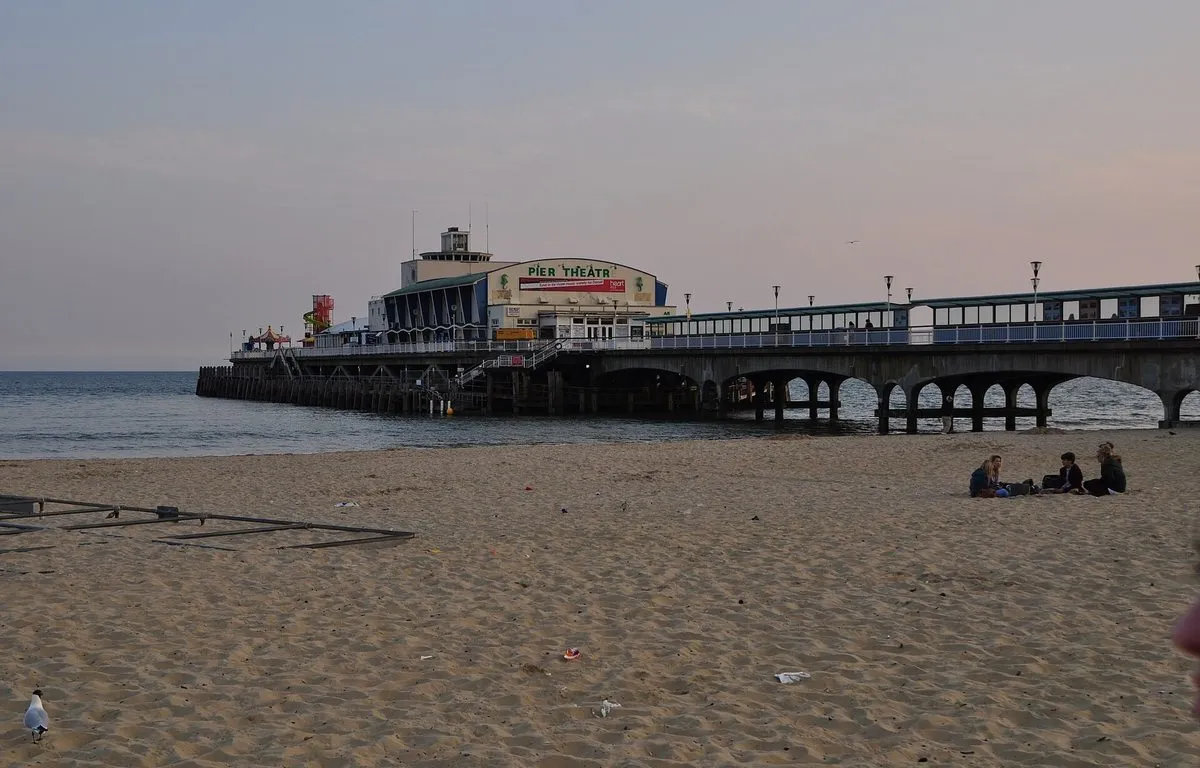
The pier provides a strong horizontal form, while the sand gives the scene foreground depth. Moving along a public route changes the overlap between the structure and the horizon. Decide whether the photograph should emphasise the pier’s shape, the activity of the beach or the wider resort setting; trying to give all three equal weight can weaken the frame.
The image is a sourced record of one moment. The tide, people, weather and any visible business features can differ when you visit. The source record and credit belong to this photograph and should not be taken as proof of a current event or available activity.
Plan a pier session
Begin from a public promenade or beach position that is suitable for conditions. Walk a little in each direction to see how the support lines and foreground change before setting up equipment. Keep the group and bags away from the waterline when waves or a rising tide make that position inappropriate.
Check the light direction for your date if a particular alignment matters. Early or late light can provide a different mood, but an exact seasonal alignment should be checked with a current tool rather than inferred from this photograph. An overcast day can still support a clean structural composition.
If the beach is busy, include people deliberately for scale or wait for a clearer moment without asking others to leave a public space. Avoid obstructing steps, ramps or the promenade with a tripod. Venue and commercial photography rules may differ from ordinary visitor access.
Access and a realistic visit
The pier is a useful central landmark, but the journey from your accommodation can include a slope from the cliff-top streets. Choose the actual route before carrying more equipment than you need. With a mixed-ability group, agree a meeting place and a short alternative rather than expecting everyone to follow the same session.
Travel Tip
Make one clear pier composition first, then change just the foreground or position. A small deliberate adjustment is easier to assess than repeatedly changing every element of the photograph.
For other subjects, use Photos & Photo Spots. For a broader visit, compare beach areas and the orientation map.
Bournemouth Pier Photography FAQs
Is this photograph a guarantee of the same light or beach conditions on my visit?
No. It records one scene, while light, crowds, weather and the state of the beach can change. Use the image to study composition, then choose a permitted viewpoint that suits the actual conditions on the day.
Do I need to go beneath Bournemouth Pier to make a useful photograph?
No. The shoreline, repeated supports and the pier’s relationship with the promenade can be studied from suitable permitted public positions. Keep clear of the water and busy access points; a desired angle does not justify an unsafe approach.
Where can I compare other local photography subjects?
The Photos & Photo Spots guide compares gardens, architectural detail, Boscombe and the eastern landscape. Choose another nearby subject when conditions do not suit the pier rather than treating one photograph as a fixed shot list.