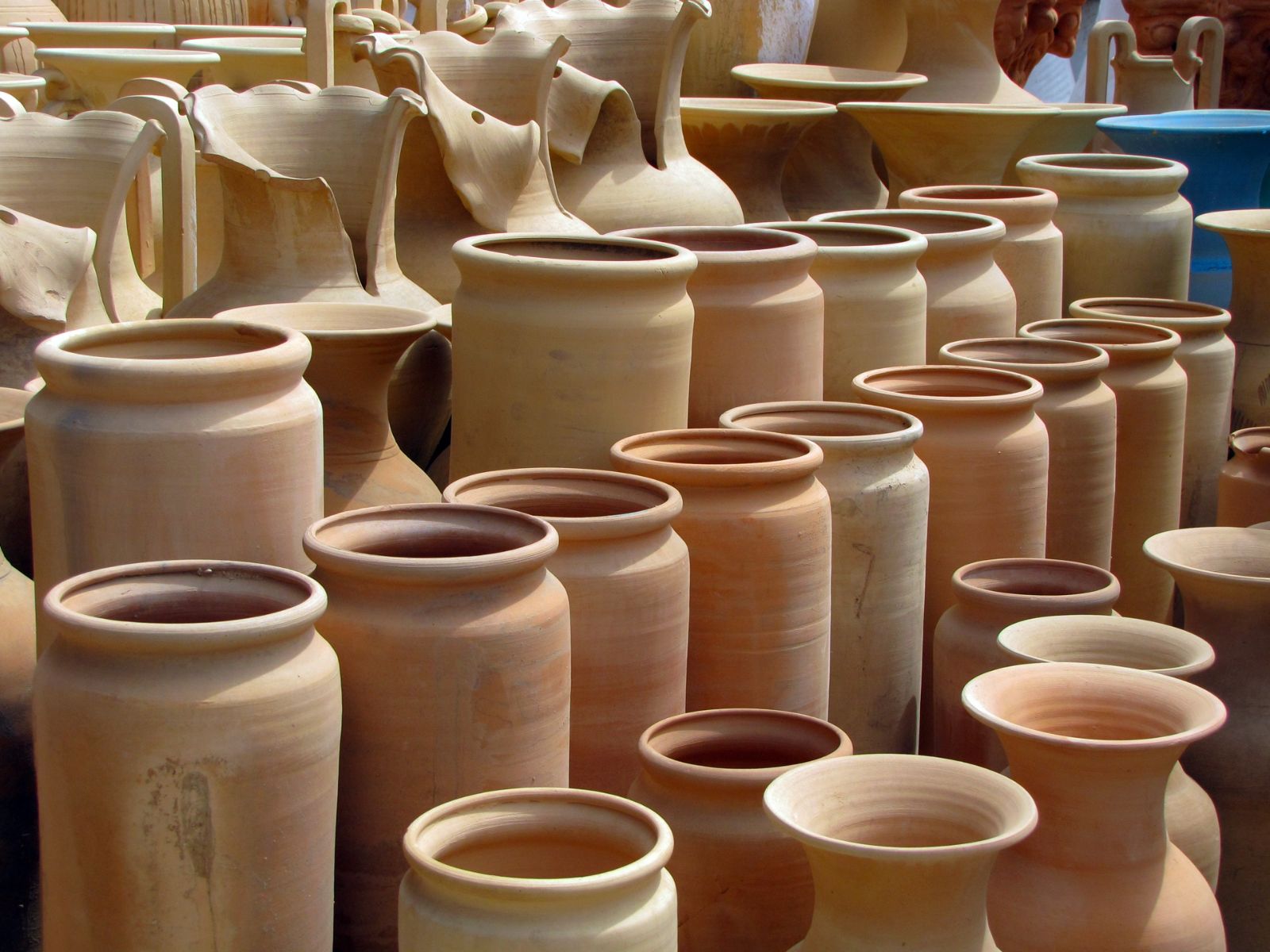
Clay pots and pitchers in Qom, Iran, photographed on 15 April 2009; an illustration of craft gifts. Photo: Mostafameraji · CC BY-SA 4.0 · Resized.
The best souvenirs are made locally, last well and are easy to carry home: handmade ceramics, textiles, spices, local tea or coffee, and prints by local artists. Before you buy, check what you are allowed to bring back: duty-free allowances apply, meat and dairy are usually banned, and products made from protected wildlife, such as ivory, coral and tortoiseshell, can be confiscated.
This guide was updated on 5 November 2026 using official EU customs guidance. Rules differ by country, so check your own country's customs website before you travel.
Souvenir ideas that travel well
Swipe or scroll horizontally to see the full table.
| Souvenir | Why it works | What to check |
|---|---|---|
| Handmade ceramics | Locally made and long-lasting, like the pottery on this page | Pack in clothes in your hand luggage |
| Textiles and scarves | Light, flat and easy to pack | Ask where and how they were made |
| Spices, tea and coffee | Small, light and full of memories | Buy sealed, labelled packs |
| Local art and prints | Supports local artists directly | Use a tube or flat folder |
| Olive oil, wine or spirits | A taste of the place | Alcohol allowances and liquid rules in hand luggage |
| Shells, coral, ivory | Avoid | Often banned or need permits |
Customs allowances
Most countries let you bring back goods for personal use up to a set value without paying duty or tax. Check your own country's rules before you shop:
- Arriving in the EU from outside it: goods worth up to €430 per traveller if you travel by air or sea, or €300 by land; some EU countries set a lower limit for under-15s. The alcohol allowance is 4 litres of still wine and 16 litres of beer, plus either 1 litre of spirits over 22% or 2 litres of fortified or sparkling wine. Travellers under 17 have no alcohol or tobacco allowance.
- Arriving in the UK: HM Revenue & Customs sets a personal allowance (currently £390 for most goods). Check gov.uk before you travel.
- Arriving in the US: US Customs and Border Protection sets a duty-free personal exemption (generally $800 per person). Check cbp.gov for the current rules.
Declare anything over your allowance; keep receipts to show what you paid.
Food and drink
Food rules are strict, to stop the spread of animal and plant diseases. Bringing meat and dairy products into the EU from outside it is banned, and undeclared products are confiscated and destroyed. Fish (up to 20 kg), eggs, honey and up to 2 kg of other products without meat or milk are generally allowed, and plants need a certificate. Other countries, including the UK, US and Australia, have similar rules. Sealed, commercially labelled spices, tea, coffee, sweets and chocolate are usually the safest choices.
Products to avoid
Many souvenirs made from wild animals and plants are protected under the international CITES convention. Products made from ivory, tortoiseshell, coral, certain shells, reptile skins and some tropical woods can be illegal to buy or bring home, even if they are sold openly in markets. Caviar is limited to small amounts; in the EU, 125 grams without a permit. If you are not sure what something is made of, do not buy it.
Also avoid antiques and archaeological objects unless the seller can provide export documents, as removing cultural heritage items is illegal in many countries.
Buying tips
- Buy from makers: workshops, cooperatives and craft markets put more money into local hands than airport shops.
- Bargain politely where it is the custom, and pay fair prices for handmade work.
- Pack liquids carefully: bottles over 100 ml must go in checked luggage, unless bought after security.
- Ask about shipping for large items; many shops can send them home for you.
Planning your next trip? See our European Christmas markets guide for handmade gifts.
Souvenirs: FAQ
Can I bring cheese or sausage home from abroad?
Not into the EU from outside it: meat and dairy products are banned. Check your own country's rules.
Are shells and coral allowed as souvenirs?
Often not. Many are protected, and you may need a permit; it is best not to buy them.
How much can I bring back duty-free?
Into the EU, €430 by air or sea. In the UK and US, check the current personal allowance on the official customs websites.
Sources and planning checks
Allowances and food rules were checked on 5 November 2026 against the European Union's Your Europe portal. UK and US allowances could not be read on the official websites; check gov.uk and cbp.gov before you travel.
- Log in to post comments