
Sign in
For Photos4Travel editors and team members.
USA · MIAMI GUIDE
Miami Safety: Beaches, Heat and Useful Contacts
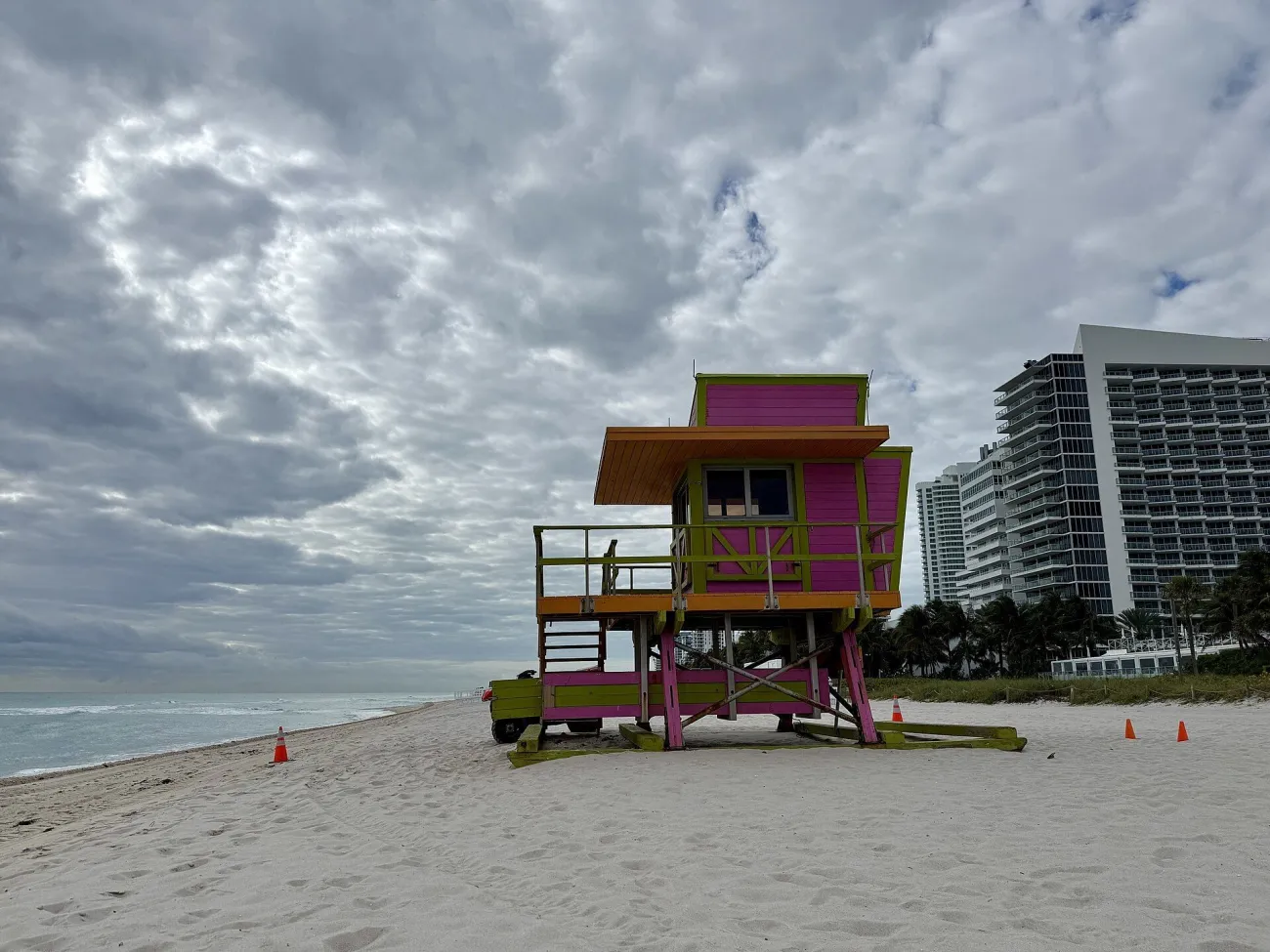

A sensible Miami safety plan is quite practical: choose a staffed stretch of beach, take heat and thunderstorms seriously, and arrange the journey home before a late night out. For an immediate emergency, call 911. The advice below focuses on decisions that matter while visiting Miami and Miami Beach.
Swimming: check the beach you are using
Look at the flags and notices when you arrive, then ask the lifeguard if you are uncertain. A bright sky and warm water do not tell you whether currents are safe. Choose a lifeguard-protected area and follow instructions to leave the water. Do not use the conditions at one beach or an early-morning website update as permission to swim anywhere for the rest of the day.
Miami Beach Ocean Rescue publishes current conditions and swimming advisories. Water-quality notices can matter after heavy rain, when runoff affects coastal water. A health advisory and a surf warning address different risks, so check both. Other beaches and parks may have their own notices and supervision arrangements.
Rip currents can carry a swimmer away from shore. If caught, avoid exhausting yourself by trying to fight directly against the current; follow National Weather Service rip-current guidance and signal for help. Alert a lifeguard if someone is struggling. Entering the sea to attempt an untrained rescue can create another emergency.
Keep valuables to a minimum on the sand, and decide who is watching bags before the whole group enters the water. With children, agree on a clear meeting point and provide close adult supervision. The presence of a lifeguard does not replace watching your own child.
Heat, humidity and thunderstorms
Plan the longest exposed walks for cooler parts of the day. In summer, build in air-conditioned stops and carry water. Shade on a map is difficult to judge, and a waterfront breeze can make it easy to underestimate sun exposure. The county's heat-safety advice highlights extra care for children, older adults and people whose health or medication makes heat harder to tolerate.
Shorten the plan if someone is struggling rather than pushing on to a timed booking. Never leave a child or pet in a parked car. If serious illness develops, seek urgent help; a sightseeing schedule is not a reason to delay care.
At the first sound of thunder, leave the beach, pool or exposed park and move to a substantial enclosed building or an enclosed hard-topped vehicle. A beach umbrella, open shelter or isolated tree is not adequate protection. The National Weather Service advises waiting at least 30 minutes after the last thunder before returning outside.
Travel Tip: On arrival at an exposed beach or park, notice where you could take proper shelter. It is easier to make that decision before a storm arrives than while everyone is packing wet towels.
Hurricanes, heavy rain and flooding
Atlantic hurricane season runs from 1 June to 30 November. Check the National Hurricane Center when tropical weather may affect your trip and follow local emergency instructions. The Miami weather guide explains how seasonality changes an itinerary without treating every summer visit as a storm event.
If a storm threatens, talk to your accommodation about its procedures and monitor airline and excursion updates. Keep essential medication, documents, a charged phone and a power bank accessible. Follow evacuation orders and do not head to a beach, jetty or causeway for dramatic photographs.
Heavy rain and high tides can create problems even without a hurricane landfall. Do not drive or walk through floodwater; its depth and condition are difficult to judge. A map route that remains visible is not proof a road is usable. Check local alerts, road conditions and your transport provider before setting off.
City walks, belongings and nights out
Judge the actual street and time of day, rather than treating every part of a large neighbourhood as identical. Keep phones and cameras secure, use busy routes where practical and leave a poorly lit or uncomfortable situation. For a late return, confirm the pickup point, match the vehicle and driver to the booking, and keep enough phone battery for the journey.
At bars and clubs, check the entry conditions before joining a queue. Keep drinks in view and arrange how the group will get home. Do not plan to drive after drinking. A venue's closing time and the last train or trolley are separate facts; the free Metromover is not an all-night service.
Major events and busy March weekends can change beach access, street use, parking and transport arrangements. Read current city announcements for your dates. Do not assume an old curfew, fine or road closure applies unchanged to the next year. Use the events guide to anticipate where a crowd is likely to concentrate.
Health and accessible planning
Keep prescribed medication and essential information in your hand luggage, and know how to contact your insurer for non-emergency care. A pharmacy, urgent-care clinic and hospital emergency department serve different needs; ask an appropriate professional for advice rather than choosing only by proximity. Use 911 for an immediate emergency.
For Everglades or mangrove outings, bring appropriate insect protection and follow the label. Do not approach, feed or try to reposition wildlife for a picture. Choose an activity suited to the group's mobility, swimming ability and tolerance of heat.
Check accessibility with the actual venue or operator. Historical gardens may include uneven surfaces; a beach access point may have different facilities from the next one. For rail journeys, check elevator status before leaving. For boats, ask about boarding, toilets and assistance rather than relying on the word “accessible” without detail. The transport guide covers the main local systems.
Useful Miami contacts
These contacts were checked against Miami-Dade County's official directory on 10 November 2026. Save the numbers and your accommodation address before you need them. Police jurisdiction can differ between the City of Miami, Miami Beach and other municipalities.
Swipe or scroll horizontally to view the contact details.
| Need | Contact | Use |
|---|---|---|
| Immediate emergency | 911 | Police, fire or medical emergency |
| County services and information | 311 or 305-468-5900 | Non-emergency government information |
| County Emergency Management | 305-468-5400 | Emergency-management information, not a substitute for 911 |
| County sheriff, non-emergency | 305-743-7433 | Miami-Dade Sheriff's Office; check the relevant local jurisdiction |
| Traffic information | FL511 | Road conditions and traffic alerts |
| Beach conditions | Miami Beach Ocean Rescue | Current sea conditions and swimming advisories |
For visitor maps, brochures and local travel information, the Greater Miami Convention & Visitors Bureau (GMCVB) lists its office at 201 South Biscayne Boulevard, Suite 2200, and telephone 305-539-3000. Use the official visitor-centre directory to find a centre near your outing and check its current opening notices before visiting.
For wider preparation such as entry documents and US-wide practical arrangements, continue with the USA travel guide.
Miami health and safety FAQ
Is it safe to swim when the weather is sunny?
Sunshine does not rule out strong currents or a water-quality advisory. Check local flags, notices and lifeguard guidance at the beach you are using.
Is a beach shelter safe during lightning?
An open-sided beach shelter is not suitable lightning protection. Move to a substantial enclosed building or an enclosed hard-topped vehicle and follow official instructions.
Should I call 311 in an emergency?
No. Call 911 for an immediate emergency. The county's 311 service handles non-emergency government information and services.
Do hurricane precautions only matter in summer?
No. The official Atlantic season includes autumn and ends on 30 November. Flooding and thunderstorms can also require changes outside that period.